Thursday, June 14, 2007

The Role of Madrasah in Society

"Madrasah (Arabic: مدرسة) is the Arabic word for any type of school, secular or religious (of any religion).

The word "madrasah" also exists in many Arabic-influenced languages such as Urdu, Persian, Turkish, Kurdish, Indonesian, Malay and Bosnian. In the Arabic language, the word مدرسة implies no sense other than that which the word school represents in the English language, such as private, public or parochial school, as well as for any primary or secondary school whether Muslim, non-Muslim or secular. While in the US, madrasah is considered as a post-graduate Islamic school, the correct Arabic term for a university, however, is jamiʿah. The Hebrew cognate "midrasha" also connotes the meaning of a place of learning.

A typical Islamic school (madrasah) usually offers two courses of study: a "hifz" course; that is memorisation of the Qur'an (the person who commits the entire Qur'an to memory is called a hafiz); and an 'alim course leading the candidate to become an accepted scholar in the community. A regular curriculum includes courses in Arabic, Tafsir (Qur'anic interpretation), shari'ah (Islamic law), Hadith (recorded sayings and deeds of Prophet Muhammad), Mantiq (logic), and Muslim History. Depending on the educational demands, some madrasahs also offer additional advanced courses in Arabic literature, English and other foreign languages, as well as science and world history.

People of all ages attend, and many often move on to becoming imams. The certificate of an 'alim' for example, requires approximately twelve years of study. A good number of the huffaz (plural of hafiz) are the product of the madrasahs. The madrasahs also resemble colleges, where people take evening classes and reside in dormitories.

An important function of the madrasahs is to admit orphans and poor children in order to provide them with education and training.
Due to administrative mishandling, radical political indoctrination of students and adopting a more conservative view of the simple teachings of Islam, especially in certain Muslim countries, madrasahs nowadays are frequently deemed as ideological and political training grounds for hatred against the West.
In certain countries, the heavy emphasis on religious teachings to the exclusion of more economically viable subject areas has been criticized. It is important to remember that while these political and ideological biases exist on a school-by-school basis, the word madrasah literally means "school" and does not imply a political affiliation." (emphasis mine) -- Wikipedia
................................

How can we learn from Madrasahs (which we can incorporate into our local christian education)?
  1. Democratisation of education

  2. Decentralisation of institutions of learning

  3. Education in mediums that are meaningful and effective at the grassroot level

  4. Education for the poor and underprivileged

  5. Promoting life-long education and intellectual pursuit amongst lay people

  6. Flexible, alternative approaches to learning from the conventional formal education

  7. Community-based, church/mosque centred education
  8. Ecumenical / interdenominational approach to education, exploring the whole spectrum of religious interpretation

Wednesday, June 13, 2007

Abide with Me

Tuesday, June 12, 2007

A Tribute: Tan Sri Dr. Tan Chee Khoon

By Ong Kian Ming

"He that is without sin, let him cast the first stone".
"The beam that thou seest in thy neighbour's eye thou seest not in thine own".


Two familiar bible verses. Nothing extraordinary.

But what if I told you that these two verses were once uttered in the halls of our Dewan Rakyat?

The tongue-lashing was directed by a Tan Sri Tan Chee Khoon, at the Alliance party (the pre-cursor of today's Barisan Nasional) and the PAP (Singapore's current ruling party).

Both parties had accused the Socialist Front, which he belonged to, of being pro-Communist. He condemned the blanket generalisation.

One of the most respected opposition politicians of his day, Tan Sri Tan Chee Khoon is a man still admired for his guts, determination and integrity. In the Houses of Parliament, he was known as "a Christian in the Muslim dominated chamber" and was prone to "spice up" his speeches with Scripture verses.

"Tan Sri Tan who?" some of you might ask. It is sad that not many Malaysians recognise this name today. We easily look West or into the distant past for heroic Christian figures, but we are sadly unaware of this local son – from our own time – who had lived a life of congruence, in faithful practice of his faith while emerging as an astute politician.

Tan Chee Khoon was born into a poor immigrant family and lived at 11th mile Cheras Road. From very humble beginnings, he grew up to be a successful doctor, a Member of Parliament for 3 terms, an opposition leader for 3 parties – winning, in the process, a host of accolades and achievements.

A brief look at his life would force us to abandon prejudices about politicians: "corrupt,self-serving, power-hungry, opportunistic", and force us to examine our own lives beyond the four walls of the offices we work in and the church building we worship in.

He reached out with his heart and soul to all layers of Malaysian society, first in his medical practice and, later, as a politician. As a general practitioner, he would see his patients late into the night, learning Tamil and Punjabi so that he could converse better with some of them. He also was the driving force behind the Sentosa Medical Center, which was set up to cater to the poor and needy who lived in the heart of old Kuala Lumpur, along Jalan Tuanku Abdul Rahman.

As a politician, he tried to help all the 'rakyat' who came to him irrespective of race or religion, and if he could not help them directly, he would point them to someone else who could.

Tan Sri Tan worshipped at the KL Wesley Methodist church, serving actively and representing the church in large-scale gatherings of the Methodist churches of Singapore and Malaysia.

In one such conference, the issue of restrictions on non-Muslims proselytising among Muslims was brought up. He spoke against the restriction, and taunted the establishment for fearing the government. He reminded the elders of the Church that the first Christians were thrown to the lions and had no fear of death.

He was one of the few who directly confronted Prime Minister Mahathir Mohamad, when the latter first came into office, on a host of issues connected to freedom of religion and worship. He questioned the scarcity of Indonesian or Malay bibles, about the difficulties for non-Muslims to build places of worship, about freedom of religion as enshrined in the constitution.

While things did not change overnight, the fact that he stood up and asked is an encouragement to others - to keep questioning and to keep striving for religious rights. The Al-Kitab has certainly become, slowly, more widely available.

Tan Sri Tan was conferred with a Doctor of Laws from the University of Malaya for his long, unsalaried service on the university council. He was awarded the Panglima Setia Mahkota, which carried the title of Tan Sri, and the Darjah Paduka Mahkota Selangor by the Sultan of Selangor.

Remember, we're talking about an opposition politician here!

These are merely a few of his extensive areas of service, as well as awards, achievements and titles gathered in his lifetime.

It is an encouragement to know about a heroic fellow Malaysian Christian, and a political leader who strived to live a holistic life. Such people clearly demonstrate that serving God is to be pursued both within, and without, the walls of a church.

Let's pray for more local heroes to rise up to the task of serving Him like the late Tan Sri Tan Chee Khoon.

Let's pray for courage, for ourselves, to rise up like he did.

Monday, June 11, 2007

Letter to the Medical Student

I truly hope that you all will grow up to be good doctors. It is on this hope that teachers like us are willing to sacrifice time and effort to teach you all.

But you must first and foremost realise that what you are studying is not just any university course BUT studies that will bring you into the fold of a noble profession, helping the sick and the infirmed.

The hardest conviction to get into the mind of a beginner is that the education upon which you are engaged is not a college course, not a medical course, but a life course, for which the work of a few years under teachers is but a preparation .

What you are studying now is only the basics and the start of a long journey. I truly hope that you have the love for humanity to pursue this course NOT with the devotion of a student on an intellectual quest but of a LOVER pursuing the Love of his or her life. Medicine is NOT a course, not a means of earning a living BUT a LIFE.

You can all become good students, a few may become great students, and now and again one of you will be found who does easily and well what others cannot do at all, or very badly ; a genius.

We do not hope to train geniuses, we do NOT need to for they will arise above the crowd irrespective of what we do or not do. But we hope to train good decent people who wants to help the strickened. As I repeatedly said, I can only teach you how to THINK like a doctor, the facts of medicine you can easily teach yourself.

You all have to study hard, to spend time in the wards talking to patients and examining them. What is lacking is not the Map, you all are blessed with good teachers ever willing to guide you all, what is lacking is that you are sitting comfortably on the shore and trying to learn how to swim!

Concentration, practise and routine is the price the modern student pays for success. Thoroughness is the most difficult habit to acquire, but it is the pearl of great price, worth all the worry and trouble of the search. The run of the mill student lives an easy, butterfly life, knowing nothing of the toil and labor with which the treasures of knowledge are dug out or wrung by patient research.

The excellent student is a citizen of the world, a lover of humanity, a decent human for whom medicine is NOT for profits but for the alleviation of the pain of the sick.
This is the student that I hope you all are.

Divide your attention equally between books and patients. The strength of the student of books is to sit still—two or three hours at a stretch—eating the heart out of a subject with pencil and notebook in hand, determined to master the details and intricacies, focussing all your energies on its difficulties. Get accustomed to see the facts that you learn in the bodies of your patients, for that is the only way you can remember them, for the wards are the libraries of disease and the patient your true tutor.

I scold you all because I care, the day I stop scolding is the day when you realise that I had given up on you.

Christian and Elections

We've all heard that we've got to play our part as Malaysian citizens but how should we do so? What should our role be as Christian Malaysians? Here I want to suggest some practical steps, which we can take during and in between elections with differing levels of commitment depending on our own political convictions.

1) Register to vote. I hope that most I-bridgers who are 21 and above have already registered to vote. This is the first step and the bare minimum, which we need to do as a responsible Christian citizen of this country. Registration is a simple process. You just need to bring your IC to the nearest post office and the rest will be done for you. Registration is year round. Also, the person taking down your details will ask you for your religion. Here's our chance to make sure that the authorities (and the politicians) know that the number of Christian voters in this country are growing. The larger we are as a % of the electorate, the greater the likelihood that we can have a more substantial voice in influencing the policy-makers.

2) Know your MPs and State Assembly representatives. Before the elections, make sure you find out at least a little about the aspiring candidates from all sides at the parliament as well as the state level. If possible, try to attend at least one ceramah of the candidates, which you know less about so that you can make a more informed choice when the time comes to cast your vote.

3) Organize and mobilize the community. And I don't mean this in a partisan sense. You can be part of a committee that organizes talks in your churches where all the candidates will be invited to share their views. In this way, more people can benefit from meeting the candidates and hearing what they have to say about their own candidacy. Saint Francis Xavier (SFX) along Jalan Gasing, organized one such event where all 4 candidates (2 parliament and 2 state) were invited to come to speak as well as to listen to the congregation (John was one of them). It is a good way to bridge relationship between the church and the government, also to voice out our concerns and aspirations as a community of faith.

4) Keep abreast of the issues. Scan through the papers to know where different parties stand of the different issues of the day – the economy, education, religious freedom, social ills, corruption, human rights etc… Keep track of the service record of the incumbent so that he or she can continuously be made accountable for their
responsibilities to the constituents.

5) Be part of a campaign. This step requires you to take a partisan stand in terms of the party and candidate you want to support in a more public fashion. This requires a higher level of commitment e.g. taking leave to help someone campaign but should be encouraged if it arises from one's political conviction to get involved in a more hands on manner. But make sure you support the party and more importantly, the candidate, whose ideals and aspirations you can agree with!

6) Be prayerful. Pray for the smooth running of the campaign and for the safety of the candidates and their workers as they travel extensively during the short campaign period. When the results come out, pray for wisdom for the winners and for encouragement for the losers. Pray also for the leaders of the government and the Opposition as they require great wisdom to carry out their roles in a responsible manner.

7) Continue to engage post election issues. Stay on your toes even after the elections. If candidates in your areas have made election pledges, this will be a reminder that the people expect them to follow through on their promises.
-- Kian Ming

Sunday, June 10, 2007

Tinggal Sertaku

Tinggal serta ku hari t'lah senja
G'lap makin turun Tuhan tinggallah
Lain pertolongan tiada kutemu
Maha Penolong tinggal sertaku

Hidupku surut ajal mendekat
Nikmat duniawi hanyut melenyap
Tiada yang tahan tiada yang teguh
Kau yang abadi tinggal sertaku

Aku perlukan Engkau tiap jam
Dalam percobaan Kaulah kugenggam
Siapa penolong yang setara-Mu
Siang dan malam tinggal sertaku

Aku tak takut jika Kau dekat,
Susah tak pahit duka tak berat,
Kubur dan maut mana jayamu?
Tuhan yang bangkit tinggal sertaku

-- Lagu Kemenangan Umat

Saturday, June 09, 2007

Keadilan, Belas Kasihan dan Kesetiaan

"Akhlak dalam masyarakat hari ini kian merosot. Peningkatan peristiwa jenayah ganas terhadap manusia lain sungguh menggerunkan. Kes-kes pencabulan, bunuh dan rompakan semakin lumrah meskipun liputan berita meluas dan kehilangan nyawa atau kecederaan pada mangsa jenayah cukup merisaukan kita! Tidakkah manusia masih berhati perut? Begitu juga dengan amalan rasuah yang masih berleluasa dan nampaknya tidak reda-reda.

Malah Tun Mahathir mendakwa amalan penyelewengan itu kelihatan makin diterima orang ramai, daripada kelakuan di “bawah meja” ke “atas meja”. Pengaruh gereja sebagai garam dan cahaya harapan dunia seperti tidak meninggalkan apa-apa tanda yang ketara ke atas situasi semasa Malaysia. Mungkinkah kita, sebagai umat Kristian dan wakil Kerajaan Tuhan di Malaysia, terlalu asyik mengejar ‘dunia akhirat’ sehingga kita mengabaikan tanggungjawab di ‘dunia sekarang‘?

Mungkinkah kita terlalu berfikiran sempit, kurang prihatin dengan hal ehwal semasa dan hanya mengambil berat kewarakan peribadi dan hukum hakam ibadah?

Bagaimanakah kita dapat menyahut seruan sebagai “garam dan cahaya” dunia jika kita enggan melibatkan diri dalam isu-isu dunia dan kehidupan harian insan-insan yang memerlukan “rawatan”? Yesus tidak suruh kita mencariNya di syurga untuk diselamatkan. Beliau sendiri datang memasuki dunia kita, berjalan bersama kita serta mencurahkan nyawaNya di antara kita supaya kita dapat Firman kehidupan.

Dalam kitab Amos, Tuhan menjelaskan apa yang lebih mustahak dalam hatinya. Ia bukan irama muzik indah dan sidang jemaah kita yang semakin berkelengkapan canggih, atau pun aktiviti keagamaan Kristian (seperti lebih banyak pelekat cermin kereta, poster dinding, risalah dan lambang ibadat yang lain).Ia berkenaan keadilan dan hidup muhsin yang Tuhan kehendaki tanpa mengorbankan yang lain-lain. Dengarlah kata-kata Yesus kepada orang Farisi dalam Matius 23:23

'Celakalah kamu, hai ahli-ahli Taurat dan orang-orang Farisi, hai kamu orang-orang munafik, sebab persepuluhan dari selasih, adas manis dan jintan kamu bayar, tetapi yang terpenting dalam hukum Taurat kamu abaikan, iaitu: keadilan dan belas kasihan dan kesetiaan. Yang satu harus dilakukan dan yang lain jangan diabaikan'."

-- Lai Tak Meng, Persekutuan Kristian Graduat

Friday, June 08, 2007

The Role of Religion in The 21st Century

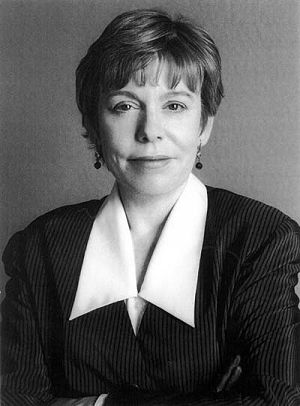
PUBLIC LECTURE BY KAREN ARMSTRONG ON “THE ROLE OF RELIGION IN THE 21ST CENTURY”

The Institute of Diplomacy and Foreign Relations (IDFR) together with International Movement for a Just World (JUST), Universiti Sains Malaysia (USM) and Institute of Strategic and International Studies (ISIS) are co-organizing the above lecture on Saturday 16 June 2007, 10.00 am at the Mandarin Oriental Hotel, Kuala Lumpur .

Admission is free.

If you and your friends are interested in attending the above lecture please contact Puan Shazatul (IDFR) – Tel: 21491018 / 21491000 Email: shazatul@idfr.gov.my.

Karen Armstrong is one of the world’s leading commentators on religious affairs. She is a best-selling author, whose books have been translated into forty languages. Her early work focused on the monotheistic faiths of Judaism, Christianity and Islam, but she has since begun to explore the eastern religions. Her work is scholarly but written for the general reader, and has been appreciated not only by western audiences but also by Muslims, Buddhists and Hindus. She is a broadcaster, columnist, and is much sought after throughout the world as a public speaker. Her focus is not only on theology and spirituality but on the political implications of faith in the modern world.

Karen Armstrong spent seven years as a Roman Catholic nun in the 1960s, but then left her teaching order in 1969. She studied English Literature at the University of Oxford, earning the degrees of B.A. and M.Litt.. Since then she has taught modern literature at the University of London, and headed the English department in a girls’ public school. In 1982, she became a full time writer and broadcaster.

Her books include: A History of God [1993], which became an international bestseller; Jerusalem, One City, Three Faiths [1996]; The Battle for God, A History of Fundamentalism [2000]; Islam, A Short History [2000]; Buddha (2001); The Spiral Staircase: A Memoir (2004); A Short History of Myth (2005).The Great Transformation: The Beginning of Our Religious Traditions (2006); and finally Muhammad: A Prophet for our Time (2006).

The 3rd book was banned in Malaysia well known for its dearth of academic freedom.

Since September 11, 2001, however, she has become chiefly known for her work on Islam and Fundamentalism, particularly in the United States. She has addressed members of the United States Congress and the Senate on three occasions, has participated in the World Economic Forum, and spoken at an informal debate in the General Assembly of the United Nations. In 2005, she was appointed by Kofi Anan to take part in the United Nations initiative “The Alliance of Civilizations” which completed its report on the reasons for the rise of extremism and the best means of stemming this in November 2006

In autumn 2001, Karen Armstrong was Scholar in Residence at Lowell House, Harvard University, where she also delivered the Tillich Lecture (2001), the Peabody Lecture (2002) and the Ingersoll Lecture on Immortality (2005). In addition, she has lectured at Yale, MIT, Stanford, McGill and many other universities and colleges throughout Canada and the United States. She has recently received honorary degrees at Aston University in the West Midlands, where her books are required reading on the MBA course, and at Georgetown University, Washington DC. In the autumn of 2007, she will become the William Belden Noble Lecturer at Harvard.

It is a refreshing note that she has quite a lot of fan in Malaysia. So if you wanna find out more, go for that lecture. This is something you don't get to do often. Why wait?

Searching for the Chinese face of Christ

"...Chinese are pragmatics and our psychology for responding to God or spirits is on the basis of how a religion or deities help us in our daily lives. Core questions in Chinese thinking revolve around these immediate issues: will this deity help us overcome fears? Will following this religion improve our chances of going to a better world? Will our families be protected, and will these acts of devotion bring pleasure or displeasures to our ancestors and extended families? At the risk of oversimplifications, Chinese responses can be crudely reduced to whether this religion works, and does it work for me? These observations of the Chinese psyche have critical implications for Christian evangelistic approaches.

Western philosophies are deeply influenced by the Greco-Roman philosophical separation of being and doing. The result is Christian ethics being taught, while the application is up to the individual. Buddhists are interested in the outworking of doctrines and emphasize doing first, rather than conceptually understanding the doctrines. The credibility of the gospel suffers a serious blow when Christians preach ethics before...

...Our search for an Asian face of Jesus is ultimately an issue of the Lordship of Christ. The issue is not just what non-Christians think of Jesus (“who do people say I am?”) but who is Jesus to Asian Christians (“who do you say I am?”). This Christological question penetrates into the depth of Christian worship and discipleship where one’s loyalty to Christ is not confined to safe religious boundaries. The answer that Jesus is Lord cannot be verbalized merely by individuals in the privacy of their bedrooms but are to be discussed in public spaces.

Contextually, our answers to the question of who Jesus is cannot be completely disconnected from questions about Jesus commonly held by our Muslim and Buddhist neighbours. Likewise for Asians, Christian portraits of Jesus should emerge from the sufferings and heart struggles of Asia rather than a Christology developed in 16th Century Reformation Christianity. Radical discipleships must result in Christ penetrating every aspect of socio-economic and political world of Asia. The Apostle Paul has these multiple dimensions of Christ’s Lordship when he proclaimed that “Jesus Christ is the first born of all creation; for in Him all things were created, in heaven and on earth, visible and invisible, whether thrones or dominions or principalities or authorities - all things were created through Him and for Him” (Col. 1:15-16)." (emphasis mine)

adapted from "The Problem of an Alien Jesus in for Asian Christianity", by Tan Kang San, Redcliffe College

Apa Salahnya Kepelbagaian Kaum

“Dalam apa juga perniagaan yang kita lakukan, perlu ada usaha sama yang tulen antara kaum, itulah semangat Malaysia.

Apa salahnya pembabitan semua kaum dalam apa juga perniagaan, pembabitan semua pihak dapat memenuhi kehendak rakyat Malaysia,” katanya ketika dihubungi Berita Harian, semalam"

-- Dato Syed Amin Al Jeffri, Yang Dipertua Dewan Perniagaan Melayu Malaysia (DPMM)

Beyond Asabiah

"This reminds me of the words of the late Nurcholish Madjid, the most prominent Muslim intellectual of postcolonial 20th century Indonesia. He once said that “we Muslims still cannot go beyond the logic of tribalism, and we think that being a Muslim is like belonging to a tribe called ‘Muslims’. Muslims still think in these parochial, tribalist terms, and that is why when one person leaves Islam he or she is denouced as a traitor to the tribe. But Islam is not a tribal entity. Being a Muslim is not like belonging to the Blue Tribe or the Green Tribe: it is a state of mind, an existential state of being.”

Whatever the circumstances may be at present, and despite the legal-political obstacles placed before her, Lina Joy is a Christian and she has been a Christian for the past several years. No ammount of slander, abuse or threats of violence will change that. She also happens to be a Malaysian and as Malaysians we should be ashamed that one of our number has been forced to flee into asylum as she can no longer live in her country."

-- Prof. Farish A. Noor

Thursday, June 07, 2007

When the going gets tough

The tough gets going. Lets pray for those having exams at this time (including me), and the villagers of Kg. Jais Gua Musang who are being denied freedom of worship. Report here

Who Says Religion Can't Be Funny?

How to tell if a Catholic is driving too fast?
more here

Wednesday, June 06, 2007

Pendidikan Teologi

Semenjak mendapat jaringan lebar (Broadband) di asrama universiti, saya mendapat hubungan yang sangat akrab dengan jaringan ilmu pengetahuan, komunikasi dan komuniti online dalam internet. Salah satu daripada keberkatan yang telah saya perolehi adalah pendedahan saya kepada ilmu teologi.

Saya mula mengenali forum The Agora apabila saya melayari laman CDPC, salah satu gereja di Subang Jaya yang sama denominasi dengan gereja saya di kampung. Saya pun ternampak suatu forum yang dianjurkan oleh mereka dan menjadi begitu berminat sekali. Oleh itu, saya pun mengambil keputusan untuk menjengahnya dan begitu diberkati sekali oleh sesi forum tersebut.

Lagipun, penganjurnya Hedonese dan beberapa orang sahabatnya (yang telah saya lupa nama mereka) begitu bernas sekali bertukar-tukar pendapat dalam forum tersebut. Apa yang lebih bagus lagi adalah keramahan dan kemesraan mereka terhadap orang baru seperti saya ini, dengan mengambil inisiatif untuk berkenalan dengan saya, mengajak saya minum kopi dan juga menghantar saya pulang ke stesen KTM Subang Jaya.

Dengan itu, bermula hubungan saya dengan kumpulan tersebut dalam forum internet yang menjadi sumber makanan spiritual dan intelek saya untuk lebih daripada satu tahun. Melalui forum itu, saya terdedah bukan sahaja kepada sumber maklumat pengajian teologi dan alkitab yang boleh diperolehi di Malaysia dan juga online, tetapi juga bidang falsafah, apologetik, perbandingan agama, pelayanan di tempat kerja, dialog antara agama, keadilan sosial, politik dan isu-isu semasa. Mereka percaya bahawa iman dan Tuhan tidak boleh dipisahkan daripada hal-ehwal duniawi, dan segalanya perlu dibawa kehadapan muka Tuhan, coram Deo.

Selepas beberapa lama, saya diinspirasikan untuk membuat keputusan untuk mengambil jurusan teologi di beberapa institusi pengajian teologi yang menawarkan pengajian diploma separuh masa jarak jauh seperti Kolej Alkitab New Zealand, Kolej Baptist Carey, Universiti London dan sebagainya, tetapi peluang saya tertutup apabila permohonan saya ditolak atas beberapa halangan teknikal. Beban pengajian perubatan saya di universiti juga kian bertambah dan tidak memungkin saya untuk mengambil pengajian tambahan. Tetapi jauh dalam hati saya ada satu keinginan untuk melanjutkan pelajaran ke peringkat pasca-graduat dalam bidang-bidang jurusan kesenian yang saya minati apabila tamat ijazah pertama saya.

Baru-baru ini, saya mengenali Dr. Lim Kar Yong yang juga pensyarah Perjanjian Baru di Seminari Teologi Malaysia. Beliau merupakan lulusan jurusan hartanah di sebuah universiti tempatan di Malaysia dan selepas lapan tahun bekerja, beliau membuat keputusan untuk menukar bidang vokasionalnya kepada bidang kajian dengan mendapat biasiswa sarjana di Seminari Teologi Gordon-Conwell dan doktoral di Universiti of Wales. Pencapaian cemerlang dalam pengajiannya membuktikan kesungguhan dan minat beliau untuk mengenali Tuhan bukan sahaja melalui keikhlasan hati, tetapi juga melalui proses intelek yang kurang diambil perhatian oleh masyarakat.

Blognya, My Homilia berkongsi tentang pendapat dan isu-isu yang dihadapinya sebagai seorang pensyarah dan akademik.

Jehovah Witness and Door Knocking

This commentary is quite insightful. In the midst of our love-hate co-existance between orthodox Christians and Jehovah Witnesses, it is a resemblance of what it means to co-exist and having the freedom of religion (even the freedom to disagree), without coercing your beliefs to others nor to water down your faith. Joel Engardio writes

"Our essential freedoms are at war with each other -- a culture war. We are divided by the very principles that defined America. But when Jehovah’s Witnesses knock, they are demonstrating that the freedoms of speech, religion and personal liberty can exist in harmony. It is how a Kingdom Hall of Jehovah’s Witnesses, an abortion clinic and a gay married couple can peacefully co-exist on the same block.

Jehovah’s Witnesses are moral conservatives who only compete in the marketplace of ideas. They attempt to persuade -- not impose -- their beliefs at your door. If you say “no thanks,” they won’t go behind your back and amend the Constitution to suit their world view. The only world they want to control is their own congregation, which is their right, and joining it is a personal choice. Jehovah’s Witnesses keep religion out of politics. Their separation of church and state is absolute: they don’t vote, pledge allegiance to the flag or serve in the military....

And as a group with fundamental religious beliefs, they remind us that it is possible to stand firm in your faith without feeling threatened by those who choose a different path...

The knocking may be inconvenient, but it is a necessary annoyance in a free society... (because of them) Now we can all equally share our own message. Better we hear an idea we don’t like than be forced to live by it." (bracket and emphasis mine)

Tuesday, June 05, 2007

Sikhism

In Sikhism, God — termed Vāhigurū — is formless, eternal, and unobserved: niraṅkār, akāl, and alakh. Nanak interpreted Vāhigurū as a single, personal and transcendental creator. The beginning of the first composition of Sikh scripture is the figure "1" — signifying the unity of God. To achieve salvation, the devotee must develop an intimate faith in and relationship with God. God is omnipresent and infinite, and is signified by the term ēk ōaṅkār.

Sikhs believe that prior to creation, all that existed was God and his hukam (will). When God willed, the entire cosmos was created. From these beginnings, God nurtured "enticement and attachment" to māyā, or the human perception of reality.

While a full understanding of God is beyond human beings, Nanak described God as not wholly unknowable. God is omnipresent (sarav viāpak) in all creation and visible everywhere to the spiritually awakened. Nanak stressed that God must be seen from "the inward eye," or the "heart," of a human being: devotees must meditate to progress towards enlightenment.

Nanak emphasised the revelation through meditation, as its rigorous application permits the existence of communication between God and human beings. God has no gender in Sikhism, though translations may incorrectly present a masculine God. In addition, Nanak wrote that there are many worlds on which God has created life.

Saturday, June 02, 2007

Responses To The Federal Court's Verdict

The Quran does not prohibit a person from or punish a person for leaving the religion. The crux of the problems is the unwillingness of the Syariah Courts to entertain applications of the Lina Joy type...We need to come up with a more progressive approach from the Syariah Courts. It needs a totally different mindset on the way we look at and understand Islam.
~ Dr Chandra Muzaffar

I am disappointed that the Federal Court is not able to vindicate a simple but important fundamental right that exists in all persons.
~Lina Joy

I am hoping that my case would have made a difference to the development of constitutional issues in the plight of many others.
~Lina Joy

The Federal Court has not only denied me that right but to all Malaysians who value fundamental freedoms.
~Lina Joy

Ms Joy's case has tested the limits of religious freedom in Malaysia.
~BBC NEWS

The decision should not be perceived as a victory for Muslims and a loss for non-Muslims in Malaysia...Instead it should be seen as a rejection of segments to radically revamp the current formula built on mutual understanding and social realities of the Malaysian society.
~Abim president Yusri Mohamad

...one cannot embrace or leave a religion according to one’s whims and fancies.
~Chief Justice Ahmad Fairuz Sheikh Abdul Halim

To say that she is not under the jurisdiction of the Syariah Court – because she no longer professes Islam – is not appropriate.
~Chief Justice Ahmad Fairuz Sheikh Abdul Halim

This is because apostasy is an issue dealing with Islamic laws...Therefore, the NRD has adopted the policy that requires verification by the religious authorities or the Syariah Court before the department can delete the word...Therefore, I agree with the Court of Appeal’s majority judgment that the NRD’s policy is completely reasonable.
~Chief Justice Ahmad Fairuz Sheikh Abdul Halim

No one is stopping her from marrying. She is merely required to fulfil certain obligations, for the Islamic authorities to confirm her apostasy, before she embraces Christianity.
~Chief Justice Ahmad Fairuz Sheikh Abdul Halim

The NRD has not shown that one of its statutory duties is to ensure that a person has properly renounced the Islamic faith in accordance with the requirements of the Islamic authorities.
~Chief Judge Datuk Richard Malanjum's critique on National Registration Department

The NRD had acted ultra vires or illegally.
~Chief Judge Datuk Richard Malanjum's critique on National Registration Department

Hence, to expect the appellant (Lina) to apply for a certificate of apostasy – when to do so would likely expose her to a range of offences under the Islamic law – is, in my view, unreasonable.
~Chief Judge Datuk Richard Malanjum on Federal Court's verdict

This decision violates international law and stands in wrongheaded defiance of the universal human right to religious freedom.
~Angela Wu, International Director for the Becket Fund for Religious Liberty

International law and the Malaysian Constitution guarantee the right to choose your own religious beliefs and change those beliefs according to your conscience. Today the Federal Court made it clear that if the state says you are a Muslim, those rights don't apply to you. Unfortunately for Lina Joy, a universal human right has been trumped by the state's insistence that she bow to sharia law.
~Angela Wu, International Director for the Becket Fund for Religious Liberty

Where are the feminists? Oh, and how about CAIR? Or our State Department? Or shall we all just pretend Lina Joy does not exist and sing "Kumbaya?"
~Michelle Malkin

We are mindful that issues relating to religion will inevitably draw emotive responses in a multireligious society...Malaysians must be prepared to confront these issues maturely and dispassionately within the framework of our Federal Constitution as the supreme law of the land.
~S. Ambiga, President of BAR Council

In an event of any inconsistency or conflict between the provisions of State Enactments and of the Federal Constitution, the latter must prevail.
~S. Ambiga, President of BAR Council

We believe that the constitutional provision in Article 11 of the Federal Constitution which guarantees freedom of religion in our country has been severely violated.
~Dr Herman Shastri, General-Secretary of Council of Churches of Malaysia

It is, therefore, vital that the necessary legislation be enacted to ensure that no citizen would be penalised when he or she exercises the individual right to choose a faith and to practice it in freedom.
~Dr Herman Shastri, General-Secretary of Council of Churches of Malaysia

The decision of the Federal Court sets a landmark example of making legal judgement based on religious sentiment and thus inadvertently disregarding the fundamental right of an individual to profess or to practice the religion of his or her choice.
~National Evangelical Christian Fellowship Malaysia

They must have a hole in their heads if they say it’s a political decision...That is emotions (talking). If people allow themselves to be influenced by emotions, they will think of all sorts of things and suspect this and that and make themselves uneasy.
~Prime Minister Abdullah Badawi

If they have the wrong perception, what can we do? The court made a decision and I don’t question that. There are many decisions the court had made which many of us are not happy with.
~Prime Minister Abdullah Badawi

What is the point of keeping a person a Muslim if they no longer believed in the faith and made that publicly known?
~Datuk Seri Nazri Aziz, Minister in Prime Minister's Department

For Muslims to feel euphoric that Islam has finally triumphed is also misplaced. This is not a battle between Islam and the rest. It is simply restoring things in their right place, of respecting the separate jurisdictions of the Shariah and Civil courts in accordance to Article 121(1a), and of adhering to procedures.
~Dr. Mazeni Alwi, Muslim Professionals Forum

In our enthusiasm to champion religious freedom, let us not turn our backs on these mechanisms and institutions that have held together our complex society and the source of our much praised religious harmony.
~Dr. Mazeni Alwi, Muslim Professionals Forum

Indian Christian Identity

"Enough is enough. I have to say it: Indians can be Christians; Christians can be Indians. As obvious as this sounds to many people, it’s not obvious to other quarters.... I reject any claim to take away my Indian nationality from me. I am, and will be, truly and fully Indian.

... the purpose of this site is more to continue to discover the Christian implications of my God-given identity as an Indian, as a citizen of this country and an inhabitant of this world. For me, both Indian and Christian are not contradictions, but one of the many crucial descripters of a person. I am both a Christian and an Indian, though I also know that sometimes these simply become labels. For indeed it is often our actions and our character that reveals more correctly who we really are.

I want to rediscover and proclaim anew my Christian (theological) views about being Indian and about issues that concern us; and I also want to rediscover my Indian perspectives about Christian theology and other related issues that concern me.

I fully support freedom and regeneration, I fully reject forceful and bribed conversions. I will not let anyone take my country away from me. And I will continue to hold on to faith in my God. And so I reject passive silence. And I embrace active engagement with culture, love and service for humanity, protection and nurture of all creation, worship and prayer"

-- paraphrased from Nayk

Inspiration from the Early Church

"In the early church (100-300 AD), believers face a lot of persecution from the Roman Empire at all levels of life. Unbelieving Romans slander christians, accusing them for being atheist for not worshipping Greek gods, unisex worship service draws accusation that christians were involved in incest, the Eucharist whereby believers consume the flesh and blood of Christ draw suspicion that they were cannibals. In the philosophical circles, christian doctrine like the Incarnation were thought as absurd, i.e. "How can God become man? How can the dead rise again?". At the socio-political level, christians were insulted to be poor, ignorant and were bad citizens.


However, the believers stand to defend for what they believe in. In writing to those who disagree with them, speaking in the language and culture of the people, Greek, christians break free from their cultural isolation and the secular-sacred barrier. They explored what it means to be Hellenized christians and also christianized Hellenism.

Apologists like Justin Martyr, Clement of Rome and Tertullian of North Africa responded to their contemporaries in defense of the faith:

1. We are not a secret society, we can explain everything we believe to you

2. Instead of accusing us as practicing incest, you are the ones that exalt sexuality, immorality, wife swapping

3. Christianity is not only a spiritual belief, it is a reasonable belief. The Torah older than any Greek philosophy.

4. Christians are good citizens, never stop proclaiming their loyalty to the Emperor. “We do not look upon the emperor as a god, but we obey him and pray for him. We are the first to pay our taxes.”.

5. Christians did not stop being interested in public affair. They are involved in the civil government and in the army. In the Apology, Tertullian says that christians are everywhere, even in the army."

............................

Could this be our source of inspiration to be church in a Malaysian context?

Spleen


Friday, June 01, 2007

Love Malaysia?

"I love Malaysia because I have no other motherland to look up to, apart from heaven. This is where my family and friends, speaking the language and culture that I am familiar with, with the smell, taste and social fabric that I am too accustomed with. It is like the exilic Jewish people longing for the city of Jerusalem while in Babylon.

I hope for a Malaysia which is built upon the virtues of love, social justice and righteousness, whereby christians and churches in every segments of society becoming role model of what it means to be a Malaysian despite of current social realities.

For me, becoming a Malaysian christian should not be viewed in a narrowly defined lens alone, for example becoming morally pure through abstaining from corruption. But becoming an authentic christian also encompasses my responsibilities towards mission through nation-building, contributing to the civil government, celebrating religious freedom and dialogue, caring for creation and living out justice for the poor, oppressed and the alien.

Only when I start to incarnate into the world from my English-speaking, middle class mentality, to understand, engage, lower myself and make a difference at the grass root level, then I hope that I could be what I have been called to become, the “city on the hill that cannot be hid”.

Who are the grassroots? A resounding question from Luke 10:29. They are the impoverished suburban dwellers, the poorly treated migrant workers, the illiterate rural folks, the unemployed university graduates, the single mothers, the school children, so on and so forth."
-- Kerepok Lekor

Thursday, May 31, 2007

Ching Ming - Easter

"The parallel themes of death-new life in the Ching Ming-Easter events also focused our attention on the issue of pain, sorrow and suffering. The Christian hope does not lie in a form of escapism from this world in order to achieve eternal bliss in an abstract, disembodied existence elsewhere. Isn’t this otherworldly pie-in-the-sky dream the subject of much Marxist critique for dulling people’s pains to real oppressions?


The bodily resurrection of Christ is a radically contrasting solution as an open, historical event that happened in space-time continuum. As such, it is open to public scrutiny and rational investigation of its claims. What God has done in Christ, He would do on a cosmic scale for our fundamentally good but sin-corrupted creation. The world will be ultimately transformed into new heaven and new earth, not abandoned like a prison. Our physical bodies of suffering will be resurrected with glory, honor and incorruptibility. Having seen the ravages of sin, we would not desire to sin any longer in a material existence that is empowered by the Spirit. There will be no more sickness, decay or violence for God will wipe away every tear and restore all that is beautiful, noble and true.


Similar to C.S. Lewis’ vision of heaven in The Great Divorce, the future renewed world will be more substantial, more tangible and more solid than the world as we know it. If the present creation will not be abandoned but transformed, then the resurrection of Christ promises and calls the church to be heralds and agents of that new creation. In the meantime, we are to work in the here-and-now in anticipation of the eschatological vision such that we could have a foretaste of its future glory.

However, exceedingly more than the peace and joys of everlasting life, reunion with beloved ones, the splendor of the new creation and the wondrous adventures and fulfilling work in which it is possible, and perfected bodies which never experience pain, we look forward to an unveiled fellowship with the infinitely glorious and supremely personal Triune God. Greater than all the gifts of resurrected life is the ever-loving Giver Himself, who even gave Himself so that we may indeed behold and savor and worship Him forever." -- Chang Wei Hao

Wednesday, May 30, 2007

Campus Alive


I was browsing through some blogs and found out this one, and exclaimed "Wow, that's so cool!" (mind the cliche). It is so encouraging to see my little fishy that I introduced last 2 years remained, and improvised, and they are coming up with cool T-shirts, and a blog too! Truly I hope that CA will continue to be an avenue for students to spice up their campus life and grow in Christ. Well done!

Unite

Webber : Schaff does say that there is a principle of separation to bring about a correction. When that correction has been achieved, we ought quickly to unite again with the group from which we separated. He was using that with regard to the whole Protestant world and saying the Protestant world left the Catholic church for a correction. Once that correction has been made, he said, we should reunite again with the Catholic church.

CT : We'll have a hard time agreeing with each other on when that should happen.

Webber : Right.

Friday, May 25, 2007

Post-modernism


Stress


Thursday, May 24, 2007

A Student's Prayer

Ineffable Creator . . .

You are proclaimed
the true font of light and wisdom,
and the primal origin
raised high beyond all things.

Pour forth a ray of Your brightness
into the darkened places of my mind;
disperse from my soul
the twofold darkness
into which I was born:
sin and ignorance.

You make eloquent the tongues of infants.
Refine my speech
and pour forth upon my lips
the goodness of Your blessing.

Grant to me
keenness of mind,
capacity to remember,
skill in learning,
subtlety to interpret,
and eloquence in speech.

May You
guide the beginning of my work,
direct its progress,
and bring it to completion.
You Who are true God and true Man,
Who live and reign, world without end.

Amen.

St. Thomas Aquinas
Raccolta #764, Pius XI Studiorum Ducem, 1923.

Wednesday, May 23, 2007

Soulmate


Tuesday, May 22, 2007

MPs using BM

I am appalled with the quality of BM of which some MPs used.

Be Thou My Vision

Te Papa Museum of New Zealand


‘...this is a significant public project of which there have been undeniably high public architectural expectations... Complex structural and environmental building systems have been thoroughly integrated, and a high level of technical and construction proficiency is found throughout.... With Te Papa having become New Zealand’s most visited building, the architects have clearly met client and curatorial demands’
Te Papa is New Zealand's bold and innovative national museum and a recognised world leader in interactive and visitor-focused museum experiences.

New Zealand's geology and natural environment and the stories of New Zealand's indigenous people, the Mäori, are celebrated in Te Papa's permanent exhibitions, while Te Papa's Marae is a vibrant contemporary meeting house and a living communal centre, unique in a museum.

An exciting range of exhibitions display New Zealand's diverse art and visual culture and top-rating international exhibitions tour regularly. Te Papa's event programme features free events and entertainment, performances, floortalks, lectures, and more.
I Wanna Go!

Updates

May 10 - Shared the first part of Church History (Apostolic Age - Great Schism). Text-only notes available here

May 11 - Rest. Watched Spiderman 3 with Suren and Muhammad on Queen St.

May 12 - Vaipaage's 21st Birthday. Forgot to attend.

May 13 - Church Service Sermon - Gifts of the Holy Spirit by Bruce Patrick. Download

May 18 - Second part of Church History by Hsen-Han (Great Schism - Today).

May 19 - Brought new sneakers for tramping.

May 20 - Went to Coromandel for tramping trip with Mel, Zen, Nat, Neil, Nick. Met with car accident when we almost reach Kauranga Valley. Head hit windscreen. Changed plan to Mt. Manganui and Tauranga instead. Watched Perfect Stranger movie in Tauranga, starring Halle Barry and Bruce Willis.

May 21 - Came back. Sleep. Night Crossroads Service Sermon - "Advancing the Kingdom of God" by Dave Wakefield. Raised few issues with Mel at home about some theological perspectives on the Kingdom of God.

May 22 - Got back my MSS Test paper which I did very badly.

May 23 - I am here.

Wednesday, May 16, 2007

Failure

Sunday, May 13, 2007

Lingkupiku


Lingkupiku, dengan sayap-Mu
Naungiku, dalam kuasa-Mu
Di saat badai bergelora
Ku akan terbang bersama-Mu
Bapa Kau Raja atas semesta
Ku tenang s'bab Kau Allahku

Jiwaku tenang, dalam Kristus
Lihat kuasa-Nya dalam keheningan
Di saat badai bergelora
Ku akan terbang bersama-Mu
Bapa Kau Raja atas semesta
Ku tenang sbab Kau Allahku

-- Lagu Jacqlien Celosse, Maranatha Music

Saturday, May 12, 2007

Blogs That Made Me Think

Thanks to Hedonese for the Thinking Blogger Award. Made me "kembang hidung" for a while knowing that he thinks that I am thinking, but mostly my post are just plagiarism from other people's post (with and without due references) haha.

I've not being doing much thinking lately due to pure laziness and tiredness. Blogging gave me some break from studies, like crack for the addict, and I suffer from withdrawal symptoms when I don't blog (eg: uncontrolled finger shaking, constantly checking in case someone left comment on my blogs etc.). Well, here it is, 5 blogs that made me think! (For those who are not listed, that means you are not posting thinking stuff enough. Try harder next time! :P)

1. His Most Serene Highness Lord Hedonese the Proclaimer of Divine Intervention, the founder of Agora, Total Truth and Open Source, activist, theologian, bible exegete, thinker, philosopher, blogger, mystic, lover, reader, friend etc. Bringing the Kingdom to the marketplace.
2. DiscordantDude, an econs lecturer and theology student who has a lot of interest ranging from poetry, activism, academia and the arts. Part of the Rebelution, I know he is an interesting guy although I've never met him before, haha. Wonders of the internet.

3. Joey De La Paz, Phillipino minister to the Thais. A fellow blogger whom I read occasionally, and since he linked me up to his blog, I begin to regularly read him. Often posts profound reflection on his ministry and theological thought, about contextualisation, mission, liberation theology, christian witness etc.

4. Chris, a fellow Geng Salib comrade, Singaporean, Kiwi, Asian. Typical smart-ass philosopher whom often fall into great depression and angst engaging in great thinking and blogging, lol. A psychology graduate, now living in urban Singapore, but not consumed by materialism, consumerism and individualism.

5. Tania Lim, intellectual type armchair philosopher who also often fall into great depression and angst when engaging in great thoughtful debates, thinking and blogging. Very much against animal cruelty, intellectual pursuit of Truth, law, human rights and reaching out to internationals.

6. Akal Muda, someone who linked me a few years ago, whom I regularly read until today. Thoughtful posts about politics, academia and current issues, with wide range of vocab. Fan of campus activism, Sufi poetry, and critical thinking.

Blogs which nearly made into the list (keep it up!): Manifestogwl, Aetospen, DanieltheFollower, enilit, heartzofgold, cowkiwisheep, i_am_amzar
Those who are tagged, would have to tag five more thinking blogs, and link the post back to mine.

Thursday, May 10, 2007

Church History for Dummies

The presentation went well. Church History for Dummies was successful in creating awareness and interest of Christian students in university to explore the richness of the early church history and to apply historical knowledge to their day-to-day Christian living.

Some people thanked me for the presentation and I felt encouraged. At least my effort of spending almost 8-10 hours researching, summarizing and reorganising my presentation was worthwhile, and a good learning experience too.

Will post more about my reflections and the link for download too. Thanks for the prayers and encouragement.

Ayam jantan merah bertaji,
Masak seekor ayuh berjamu,
Sejarah gereja sama mengaji,
Ilmu dituntut tiadalah jemu.

Monday, May 07, 2007

Early Christian Prayer for the Authorities

Give us, O Master,
peace and concord even as you did to our forefathers
when they called devoutly upon you in faith and truth
and make us obedient to your own almighty and all holy name
and to all who have hte rule and governance over us upon earth.

For it is you, Lord
who in your supreme and ineffable might
has given them their sovereign authority
to the intent that we, acknowledging the glory and honour
you have bestowed upon them,
should show them all submission

Grant to them health and peace, harmony and security
that they may exercise without offence
the sovereignty which you have given them

-- Clement of Rome

Speak of Christ

"When we are speaking about truth and life and redemption,
we are speaking about Christ.

When we speak of wisdom,
we are speaking about Christ.

When we speak about virtue,
we are speaking about Christ.

When we speak about justice,
we are speaking about Christ.

When we are speaking about truth and life and redemption,
we are speaking about Christ."

-- Ambrose, bishop of Milan, biblical exegete, political theorist, master of Latin eloquence, musician, and teacher.

Church History - An Overview

This Thursday I will be sharing about the first 1000 years of the history of the Church, thanks to Hsen Han. Seriously I do not have enough knowledge at the first place to share, but I shall try my best to give an overview from the Early Church until the Great Schism.

Many people look at history with a cynical look. Some look at it as a boredom, some look at it as irrelevant, some look at it as fun and exciting. The challenge that I thought most crucial is to take the bits and pieces of history and join the dots, and make it exciting and applicable in our lives today.

Most important of all, the ultimate reason we study history is to see Christ glorified through the story of His bride, the Church; its strengh and weaknesses. Besides, the story of the past should be part of our own story that will be passed down generation to generation.

May we be blessed with the session this Thursday. I covet your prayers.

Mamak Food Night


Friday, May 04, 2007

Solitude

Conversation enriches the understanding, but solitude is the school of genius.
Sir Edward Gibbon


Loneliness is the poverty of self; solitude is the richness of self.
May Sarton


In contemporary society our Adversary majors in three things: noise, hurry, and crowds.
Richard J. Foster

Thursday, May 03, 2007

Christian?

"I love Christ, but I don't see how I can call myself a Christian, because I don't know what that word means anymore.” - Moby

Wednesday, May 02, 2007

Kepala Yang Berdarah

Kepala yang berdarah,
tertunduk dan sedih,
penuh dengan sengsara
dan luka yang pedih,
meski mahkota duri
menghina harkatMu
Kau patut kukagumi:
Terima hormatku

O wajah yang mulia,
yang patut disembah
dan layak menerima
pujian dunia,
sekarang diludahi,
dihina dicerca,
disiksa, dilukai ---
yang salah siapakah?

Ya Tuhan, yang Kautanggung
yaitu salahku;
dosaku t'lah Kaugantung
di kayu salibMu.
O, kasihani daku
yang harus dicela;
ampunilah hambaMu
beri anugerah!

Gembala yang setia
terima dombaMu!
Kau Sumber bahagia,
penuntun hidupku.
SabdaMu t'lah membuka
karunia tak terp'ridan
nikmat dari sorga
padaku Kauberi.

Syukur sebulat hati
kub'rikan padaMu
ya Yesus yang t'lah mati
demi selamatku.
Hendaklah 'ku terhibur
dengan tuntunanMu:
padaMu 'ku berlindung
di akhir hayatku.

Di saat aku mati,
Kau tinggallah serta;
di pintu maut nanti,
ya Tuhan, datanglah!
Di kala kecemasan
menghimpit hatiku,
berilah kekuatan
berkat sengsaraMu.

Engkaulah Perlindungan
di saat ajalku;
SalibMulah, ya Tuhan,
penghibur anakMu
dan wajahMu kupandang
dengan iman teguh.
Berbahagia orang
yang mati dalamMu!

-- Kidung Jemaat, Dengarkan

Mystical Poems

We are as the Flute

We are as the flute, and the music in us is from thee;
we are as the mountain and the echo in us is from thee.

We are as pieces of chess engaged in victory and defeat:
our victory and defeat is from thee,
O thou whose qualities are comely!

Who are we, O Thou soul of our souls,
that we should remain in being beside thee?

We and our existences are really non-existence;
thou art the absolute Being which manifests the perishable.

We all are lions, but lions on a banner:
because of the wind they are rushing
onward from moment to moment.

Their onward rush is visible,
and the wind is unseen:
may that which is unseen not fail from us!

Our wind whereby we are moved and our being are of thy gift;
our whole existence is from thy bringing into being.

The Intellectual Quest

The intellectual quest is exquisite like pearls and coral,
But it is not the same as the spiritual quest.
The spiritual quest is on another level altogether,
Spiritual wine has a subtler taste.
The intellect and the senses investigate cause and effect.
The spiritual seeker surrenders to the wonder.

-- Jalaluddin Rumi, a Sufi', great mystic and great poet. His poetry is vibrant with the energy and illumination of a saint who has reached a consciousness beyond the ordinary experiences of man.

Open Source Mission


Open Source Mission is a global initiative to make gospel centered resources accessible to the non-English speaking world. We accomplish this mission by translating contemporary Christian books and articles from English into a number of foreign languages by leveraging the power of mass collaboration.

____________________________

We believe that having access to biblically sound resources is a strategically important need for the non-Western church. We have an opportunity to bridge the translation gap and make these resources available in various languages.

Malaysian Food Night

If you happen to be in Auckland City and miss Malaysia for no good reason, do drop by at our UMSA Malaysian Food Night themed "Mamak". Served with a galore of South Indian cuisine of Banana Leaf rice (without the leaf), with chicken and lamb perattal (dry curry), roti canai, dhall, papadom, tumeric cabbage, tomato chutney, payasam and teh tarik, not forgetting our ever famous Mission Bay's movenpick ice-cream. There will be fun games, entertaining skits and great company.

Grab your tickets from the Quad today!

5th May 2007, 6.30pm
University of Auckland Marae

Tuesday, May 01, 2007

Woman

Woman or Beauty or Knowledge, you can only have one, having three or none is still a tragedy.

Practicing Humility

Here are a few suggestions on practicing humility:

There are times when swallowing one’s pride is particularly difficult and any intentions of humility fly out the window, as we get engaged in a contest of perfection, each side seeking to look good. If you find yourself in such no-win situations, consider developing some strategies to ensure that the circumstances don’t lead you to lose your grace. Try this sometimes: just stop talking and allow the other person to be in the limelight. There is something very liberating in this strategy.

Here are three magical words that will produce more peace of mind than a week at an expensive retreat: “You are right.”

Catch yourself if you benignly slip into over preaching or coaching without permission – is zeal to impose your point of view overtaking discretion? Is your correction of others reflective of your own needs?

Seek others’ input on how you are showing up in your leadership path. Ask: “How am I doing?” It takes humility to ask such a question. And even more humility to consider the answer.

Encourage the practice of humility in your company through your own example: every time you share credit for successes with others, you reinforce the ethos for your constituents. Consider mentoring or coaching emerging leaders on this key attribute of leadership.
Practise saying, "I don't know".

Humility

Words have enormous power. They can make us erupt into laughter or bring tears to our eyes. They can influence, inspire, manipulate and shock. They can build and destroy. Some words have different effects on different people. One such word is humility. It is one of those words that are seldom in neutral gear. Some, like me, love the word and all it stands for. Some almost fear it and interpret it synonymously with lack of self-confidence or timidity...

The dictionary defines humility as modesty, lacking pretence, not believing that you are superior to others. An ancillary definition includes: “Having a lowly opinion of oneself, meekness”...

We often confuse humility with timidity. Humility is not clothing ourselves in an attitude of self-abasement or self-denigration. Humility is all about maintaining our pride about who we are, about our achievements, about our worth – but without arrogance – it is the antithesis of hubris, that excessive, arrogant pride which often leads to the derailment of some corporate heroes, as it does with the downfall of the tragic hero in Greek drama. It’s about a quiet confidence without the need for a meretricious selling of our wares. It’s about being content to let others discover the layers of our talents without having to boast about them. It’s a lack of arrogance, not a lack of aggressiveness in the pursuit of achievement...

An interesting dichotomy is that, often, the higher people rise, the more they have accomplished, the higher the humility index. Those who achieve the most brag the least, and the more secure they are in themselves, the more humble they are. “True merit, like a river, the deeper it is, the less noise it makes”. (Edward Frederick Halifax)...

Humility is also a meta-virtue. It crosses into an array of principles. For example, we can safely declare that there cannot be authenticity without humility. Why? Because, there is always a time in a leader’s journey when one will be in a situation of not having all the answers. Admitting this and seeking others’ input requires some humility...

Another mark of a leader who practices humility is his or her treatment of others. Such leaders treat everyone with respect regardless of position. Years ago, I came across this reference: the sign of a gentleman is how he treats those who can be of absolutely no use to him...

Something interesting happens, too, when we approach situations from a perspective of humility: it opens us up to possibilities, as we choose open-mindedness and curiosity over protecting our point of view. We spend more time in that wonderful space of the beginner’s mind, willing to learn from what others have to offer. We move away from pushing into allowing, from insecure to secure, from seeking approval to seeking enlightenment. We forget about being perfect and we enjoy being in the moment...

Monday, April 30, 2007

Jesus, Sanatan Sat Guru

“… The Christians I met spoke of sin in this life, but that was meaningless to me. Karma was what mattered. So I decided, When they talk about sin, I think of karma, and I believe Jesus died for my karma, so I am going to accept him on those terms.
… As my mother and others in my family challenged my faith, I found that biblical concepts were only helpful if they were properly translated. My mother would say, “Jesus is a swear word. They use it in the shop every day. Why do you follow this man?”

… She had a hard time believing that Jesus would never refuse anybody. But that’s the case, I said, because he’s the sanatan sat guru.

Sanatan is a Sanskrit word meaning “eternal”; sat guru means “true living way.” You can put John 14:6 in brackets after that! He is “the way, the truth, and the life.” Guru is a living way. There are lots of sat gurus, but try to find a sanatan sat guru. No guru claims to be sanatan. Then she said, “Tell me more about this guru, who will love everybody.” So I said, “Not only is he a sanatan sat guru, he paid for karma. He paid our karmic debt.”

… We’ve produced a series of books and cds that connect with the South Asian experience. Fortunately, I was able to pay for publication, because in the early days, not many Christian publishers were willing to take on a book that talked about Jesus as the bodhisattva who fulfilled his dharma to pay for my karma to negate samsara and achieve nirvana!” -- Christ my Bodhisattva