Wednesday, August 27, 2008

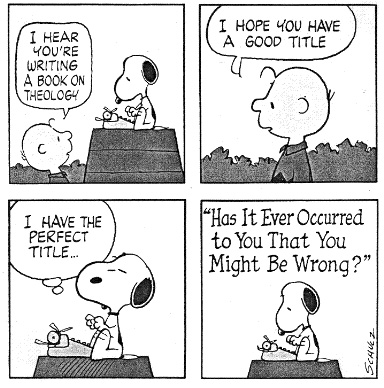
What does this mean?

"Do not suppose that I came to tear down the Law or the Prophets; I did not come to tear down but to fulfill. "Surely, I say to you, until the heaven and the earth pass away, by no means shall one iota [i.e., the smallest letter of the Greek alphabet] or one tittle [i.e., a stroke of a letter] pass away from the Law, until all happen.

(Mat 5:17-18)

Tuesday, August 26, 2008

Jenufa

jenufa

Opera in three acts by Leoš Janacek
Libretto by the composer
Sung in Czech with English subtitles

Jenůfa is based on the play "Her Stepdaughter" by Gabriela Preissova - a story of sex, lies, love and forgiveness that millions of ordinary people have lived since the beginning of time.  Janacek wrote the score in 1904 soon after he had lost his infant son, and his daughter Olga lay dying.  A harrowing tragedy that undoubtedly influenced the depth and richness of the work.

In Jenůfa, Janacek has created some of the most believable characters in opera.  The raw strength and tenderness of Janacek's musical genius provides a moving emotional foundation for a story which is achingly credible.  Jenůfa is not your usual dramatic heroine.  She is a real women with desires and hopes - ordinary in her rural background, but extraordinary in her ability to forgive.

The opera opens in a quiet Moravian village.  Jenůfa waits anxiously to hear news of her beloved Števa, for she is carrying his child - a shame she and her stepmother, Kostelnička, are hiding from the village.  Laca, Števa's half brother, is desperately in love with Jenůfa and broods ominously in the background, barely able to contain his jealousy.  How the story evolves from here will have you on the edge of your seat with your heart in your mouth for Jenůfa.

Brought to you by NZ Opera

AUCKLAND  20 - 27 September
WELLINGTON  11 - 18 October

Can't wait!

Sunday, August 24, 2008

The Evolution of the Worshipper

worshipper-cartoon-thumb

A friend gave me this link from Sivin's blog. I agree with him that I can relate my experiences with the different stages here.

The Fall of Rome

sack

The fall of Rome was the 9/11 of the ancient world; Alaric, its Osama bin Laden. As the "eternal city" crumbled, Augustine of Hippo pointed Christians to the City of God;the eternal church on pilgrimage through a world that is not our home.

Timothy George (full article here)


"What can we learn from Augustine's understanding of history in light of the fall of Rome? Augustine teaches us that Christians are those who live in time but who belong to eternity. He also teaches us that we must not equate any political entity—whether it be the Roman Empire, the American Republic, the United Nations, or anything else—with the kingdom of God. This is one side of the Augustinian equation, but there is another. Christians hold a double citizenship in this world. Like the apostle Paul—who could claim that his true political identity was in heaven (Phil. 3:20), but who also appealed to Caesar as a Roman citizen when his life was at stake—so believers in Christ live as sojourners, resident aliens, in a world of profound discontinuity and frequently contested loyalty.

Political philosopher Jean Bethke Elshtain summarizes Augustine's counsel to believers beset by such fears and hopes: "[R]esisting altogether any notion of earthly perfection, Augustine offers instead a complex moral map that creates space for loyalty and love and care, as well as for a chastened form of civic virtue."

The key word here, chastened, calls for a posture of engagement that acknowledges, in the words of the old gospel hymn, "this world is not my home; I'm just a-passin' through," while at the same time working with all our might to love our neighbors as ourselves and to seek justice and peace as we carry out what Augustine calls "our business within this common mortal life."

There are two major (and regrettably common) mistakes Augustine wants us to avoid. One is the lure of utopianism—the mistake of thinking we can produce a society that will solve our problems and bring about the Kingdom of God on earth. This was the basic error of both Marxism and 19th-century liberalism.

The other error, equally disastrous, is cynicism. This creeps upon us as we see ever-present evil. We withdraw into our own self-contained circle of contentment, which can just as well be a pious holy huddle as a secular skeptics club."

Monday, August 18, 2008

Yeah Right

I am always skeptical when certain political groups claim to be non-discriminatory because it is in itself a problematic term. They will then impose their values towards others and become discriminatory towards those who has ethnic and religious affliation, and applaud those who don't.

Saturday, August 16, 2008

The morality factor in elections

KUALA LUMPUR: Morality may be one of the most important criteria for the more than 2,000 MCA delegates in electing the party's top national leaders on Oct 18.

The political undercurrents seem to indicate that the party, with about one million members, is divided on the issue.

The first salvo on the morality issue was fired by MCA vice-president Datuk Ong Tee Keat, who is also eyeing the top party post.

Although the Transport Minister did not name anyone, it was obvious that he was referring to former vice-president Datuk Seri Dr Chua Soi Lek, whose reputation was tarnished after a sex video of him was widely circulated towards the end of 2007 and forced him to resign from all party and government positions.

Ong said in his blog on Saturday that leaders hoping for a political comeback could not be expected to have a clean slate by merely apologising for their wrongdoings and wiping them away just like that.

Dr Chua, the former Health Minister, had said that the issue of morality should not be used as a yardstick so long as a leader could perform his duties effectively and this view had won the support of Wanita MCA chief Datuk Dr Ng Yen Yen.

While the morality issue continues to be played out with ever increasing comments and opinions in the media and on the Internet, some party members seem to have made up their minds on their choice.

MCA veteran Datuk Yap Pian Hon felt that the moral standing of a leader does have a bearing on the person's leadership, as “it is important for him or her to be free of any political blackmail to speak up effectively for the community.

“You, as a leader, cannot be held to ransom by your opponents. How are you going to talk about the community's affairs if you lack moral standing?” he asked.

An MCA leader from Perlis, Loh Yoon Foo, echoed Yap's call, saying that morally tainted leaders would ultimately become a liability to the MCA and also the Barisan Nasional.

Not everyone agrees with this stand: former MCA secretary-general Tan Sri Dr Ting Chew Peh said the MCA assembly is not about to elect a saint but an effective party leader.

“We are not electing a saint, so why so much fuss about the moral background of a person?” he asked.

Datuk Thean Bok, MCA Puchong division vice-chairman, believes that the issue of morality was subjective and that it would not be used as a yardstick by delegates in picking national leaders. – Bernama

Check this out. Does the girl turn clockwise or anticlockwise?

0,,5687820,00

Monday, August 11, 2008

Morality

Tee Keat defends ‘tainted’ leaders comment

KUALA LUMPUR: Everyone has their own set of values and the right to express their views, said MCA vice-president Datuk Ong Tee Keat.

The president aspirant said that he did not mention any name when he talked about the morality of certain political leader.

He also said that there was nothing he could do to change the situation if certain people wanted to react specifically to the general statement.

“Am I not allowed to give my opinion on other people’s value? I do have the right to express my views,” he said at a function here yesterday.

On Saturday, Ong said that “tainted” public figures could not be “cleansed” simply by owning up to their wrongdoings.

He said these individuals must face up to society’s values and norms instead of giving excuses or blaming others for exposing their misconduct.

Yesterday, in a post on his presidential campaign portal – www.ongteekeat.net – Ong denied that his remarks on Saturday were meant to stifle anyone.

“I merely touched on existing norms – norms that are not set by me. Why must certain personalities be so fearful of such norms being mentioned?

“Mobilising ghost writers on a massive attack on me would not cleanse one’s misdeeds or change the norms,” he said, adding that such act was like ostriches burying their heads in the sand.

It is learnt that Ong was referring to some netizens who commented on the postings on Ong’s website.

Ong also said he would not delete comments that were posted on his web portal and those who expressed their views “have the right to say anything, including something nonsensical or hollow.”

“Let their hollowness be revealed. Such ugliness is very much part of the real world,” he said.

Some bloggers had started a discussion on the website asking visitors of the web portal whether they had seen the sex video clip of former MCA vice-president Datuk Seri Dr Chua Soi Lek.

Dr Chua resigned from all party and government posts after he admitted that he was the man in a sex DVD.

He is widely speculated to be Ong’s contender in the party election in October.

Ng: Don’t use morality to run down others

KUALA LUMPUR: Morality should not be used as a weapon to run down potential candidates, including former vice-president Datuk Seri Dr Chua Soi Lek, in the upcoming MCA elections.

Wanita MCA chief Datuk Dr Ng Yen Yen said that Dr Chua should be given another chance if he were to contest as he had privately and publicly apologised for his past behaviour.

Dr Chua, who is the former Health Minister, had resigned from all posts after he admitted to having been in a sex video. He has been tipped to make a comeback and contest for the presidency.

“This person had made a moral mistake and apologised to the family and the world. If his wife and family can forgive him, who are we not to? Let the delegates decide who they want.

“The upcoming party elections should not be filled with accusations,” she told reporters here yesterday.

Dr Ng was commenting on media reports yesterday that quoted MCA vice-president Datuk Ong Tee Keat as saying that “tainted” public figures could not be “cleansed” simply by owning up to their wrongdoings but must instead bear the consequences.

Dr Ng said Dr Chua was brave enough to admit his mistake and deserved to be forgiven especially by the party as he had paid the price for what he had done by losing his minister’s post.

“I do not dare decide or judge someone else’s morality except my own. Can you give me a leader that scores a 100% mark in morality?” she asked.

Dr Ng said she had not decided whether to contest the presidency or another post as she had to first study the MCA men’s mindset.

“I am confident of my capabilities but I have to study the men and see if they are ready for a woman leader as 80% of the central delegates are men,” she said, adding that Kelantan MCA had backed her for the top post.

Earlier this year Malaysiakini reported:

Flanked by supporters, a calm Chua told the hastily-convened press conference, which began at 3pm and ended 40 minutes later, that he arrived at the decision because “the rakyat wants me to resign”.

“I hope my resignation, made on moral grounds, will serve to be a lesson to not just MCA members, but to all the Barisan Nasional component party members as well - that those who commit offences and possess certain weaknesses must be responsible for their actions,” he said.

He expressed disappointment that the public has adopted a holier-than-thou attitude on the issue and noted sarcastically that "maknanya semuanya golongan ulamak" (it must mean they are all very pious).

Chua further said he felt proud that he had made the confession and that he could stand tall because he was not being hypocritical.

“I thought that by my admission, the people would forgive my weaknesses, but I thought wrong. This shows that honesty does not always pay, (but) it is up to the public to judge me,” he said.

Thursday, August 07, 2008

Communion of Thinkers


"Similarly, if you are to know what you think and what you might worship, you need to tune in to the conversation that others have had. You’ll end up thinking something, you’ll end up worshipping something, but the study of philosophy and theology puts you in touch with people now and in earlier centuries with whom you can speak. If you listen only to yourself, you will find yourself imprisoned; if, in isolation, you try to worship 'the God within’, you will end up only worshipping yourself. Meaning and purpose are transmitted through communities of experience and reflection. Only silly people think that religion is what a person does with their solitude: the privatisation of religion is part of the privatisation of all experience in our postmodern culture.

Religion is essentially social, and people find their space within a sharing of insights and possibilities that extend across the centuries. The business of thinking within an extended community of thinkers about the conditions of our life and the possibility of God is, I think, liberating and fulfilling."

John McDade, Heythrop College

Monday, August 04, 2008

Selamat Pengantin Baru


For those who went to watch Ausmat's "Curry Puff Blues" drama in 2005, you might have heard this lovely song by Saloma. How nostalgic.

She was ripe for the plucking

Who, what...
From just 138 cases in 1980 to 912 in 1994, the number rose to 2,431 cases in 2006 and 3,177 last year. Between 2000 to 2006, Selangor and Johor recorded the highest numbers of rape while Perlis had the lowest number. For 2006, Selangor recorded 421 rapes and Johor 343.

These are just the known cases reported to the Royal Malaysian Police. Researchers believe there are numerous unreported cases of incest or acquaintance rapes.

Malays commited 66.3% of reported rape cases, followed by 15.3% by “others”, who are natives of Sabah and Sarawak and foreign workers comprising mainly Indonesians. Chinese are the perpetrators in 10.5% of the cases and Indians in the remaining 7.8%.

Universiti Sains Malaysia criminologist Dr P. Sundramoorthy at his office in Penang.
Many offenders are aged between 45 and 55. The most common types of rape they committed were incest and acquaintance rape. Ironically, 82% of respondents over the age of 50 raped girls aged 16 and below. The trend continues today with rape victims becoming increasingly younger.

The majority grew up in rural areas, including Felda schemes (71.1%), and had low education levels. Most are married and reported good relationships with their mothers but not their fathers. Their views concerning females are, in general, degrading and humiliating. They see rape as a sexual act rather than as a violent crime.

...Why

“They often cited, suka sama suka, meaning they believed it was consensual sex,” explains Dr Rohana. “Or they’d say, she was ripe for the plucking. One said the victim was manja (acting cuddly and pampered) with me. But that was the rapist’s granddaughter!

“Some believe rape is where force was used. So having sex with the victim isn’t rape to them. They are ignorant that rape is also caused by persuasion, coercion, manipulation and relationship power between an older person and a young victim.”

Indeed, some of the men convicted for date rape or statutory rape told the researchers that sex was consensual and it was the girls’ parents who reported them because they disliked the men’s low-income jobs.

The rapists also blamed pornography and uncontrolled lust as the main factors which caused them to rape. Only two of them said women were to blame but over 60% agreed that women were temptresses.

Asked why they did not turn to prostitutes to release their uncontrollable lust, the rapists replied that prostitutes were “repulsive” and “dirty”.

What was it like meeting 90 rapists face to face?

“I must admit it was depressing entering a prison, but we prepared ourselves mentally and emotionally each time we set off. We could not show our feelings and kept cool at all times,” says Dr Rohana.

“Even so, I could not help feeling heated during one interview. I raised my voice at a 60-year-old man who took his little granddaughter into a palm oil estate and raped her. Another said, Jika makanan sudah dihidang, kalau saya tak makan, lalat akan turun. Biar saya yang makan (If food is served and I do not eat it, the flies will come. Let me be the one who consumes it).

“Similarly, a 55-year-old who raped his teenage neighbour as his wife had reached menopause, stated, Nak tidur, bantal pun sampai, kita pun tidurlah (Want to sleep and the pillow is here. May as well sleep on it).

“It was hardest to speak to people who had abused their positions of power, like a religious head who raped the teenage girls volunteering to serve in the temple under the full trust of their parents.”

Samuel found most of the rapists forthcoming and willing to talk.

“Most said they didn’t use force to have sex,” she says. “A music composer convicted of statutory rape against his teenaged stepdaughter passionately declared, ‘I am a lover, not a killer!’.

“He said his stepdaughter is a ‘hot blooded teenager who needed to be taught the right way to enjoy sex’.”

Many of the men committed incest while their wives were in menopause, pregnant, or unavailable for sex. When the men couldn’t control their urges, they sought the easiest women they could find.

“Most of them had a propietary attitude of ‘she’s mine anyway’,” says Samuel.

Read More

Saturday, August 02, 2008

Gunung Taranaki

Mt Taranaki view from the Pouakai Range

Why I am not the same like you?

mecca

A few months ago, my classmate Nadia while having lunch with me, asked why am I not a believer (in Islam) despite having acquainted myself with it? Kadok, my old classmate in college sometimes asked me jokingly through IM, when are am I becoming a Muslim (I joked back saying it depends on how he defines one ala-UMNO or PAS?).

It is a simple and profound question, and has been lingering in my mind. As follower of Christ in interaction with my friends who do not subscribe to my faith, I need to justify myself for choosing Jerusalem rather than Mecca. Here are some of my issues.

  • The lack of scriptural, theological and historical continuity
  • The limited eschatological outlook of the narrative
  • The semi-legalistic approach to salvation
  • The lack of honest intellectual introspection
  • Unconvincing assurance of salvation

I need to also reflect back the questions to my readers and friends, why are you not a Christian?

Friday, August 01, 2008

Augustine orang Hippo

augustin

"Engkau menciptakan kami untuk diri-Mu dan hati kami resah sehingga berteduh dalam-Mu" (Confessions I, i, 1)

"Secara tradisi, empat daripada bapa-bapa gereja Latin diberikan gelaran "Doktor" (guru)-- Ambrose orang Milan, Jerome, Augustine orang Hippo and Gregory the Great. Keempat-empatnya layak berkenalan dengan rapat, tetapi yang terhebat daripada mereka semestinya Augustine kerana akalnya yang dalam dan kaya sekali, dan pengaruhnya yang meluas dalam generasi-generasi selepasnya.

Ada sebab-sebabnya kita perlu berkenalan dengan Augustine, saya ingin memberikan tiga

  • Tiada persona daripada zaman silam, Kristian ataupun pagan yang lebih dikenali dengan rapat daripada Augustine. Karya-karya agungnya seperti Confessions telah mempengaruhi sastera dan pemikiran awal Eropah.
  • Augustine telah bergumul dengan persoalan-persoalan penting tentang kewujudan manusia. Apakah yang minda manusia dapat ketahui? Apakah itu Tuhan? Apakah itu kebenaran? Apakah itu keindahan? Apakah itu masa? Apakah itu sejarah? Apakah itu jiwa? Apakah itu memori dan sebagainya?
  • Augustine memainkan peranan penting dalam mencorakkan pemikiran dan doktrin Kristian. Teologi Gereja sentiasa diperjelaskan dan diperkukuhkan oleh cabaran-cabaran daripada ajaran bidaah. Augustinelah yang memberi penjelasan yang teliti dan koheren, tentang fitrah manusia, kejatuhan manusia dan penyelamatan manusia dikala kontroversi Pelagian.  Jika kita terhutang kepada Anasthasius dan bapa-bapa Kappadocia dengan penjelasan teology Trinitas, maka kita juga terhutang kepada Augustine dengan pemahaman antropologi, penyelamatan, dosa manusia dan rahmat Ilahi."

Diterjemah daripada "Augustine of Hippo: The Relevance of His Life and Thought Today", Nick Needham, Southern Baptist Journal of Theology.