Monday, June 18, 2007

You Scored As Middle Class

You're content in your position and would prefer a house or a family than a seven figure pay cheque. But you have your moments of weakness when you buy a lottery ticket in the hope of knowing how the rich and famous live.


Azmi Sharom said,

"It is at times like this that I ask myself, who cares? Apart from the urban middle classes, does anybody care about human rights, democracy and all those other words liberals like myself get all hot and bothered about? Frankly, there are times that I doubt it.

Democracy and human rights go hand in hand. Any effort to move away from these two ideals must be challenged. No matter how useless it may seem. And who better to do it than the urban middle classes?

If the working classes and the rural segments of our society seem uninterested it is, in a way, perfectly understandable.

It is inconceivable that when one is worried about the next meal, or the upcoming school fees, matters such as the freedom of a person to choose who he wants to worship, or that this country seems to be sliding away from its secular democratic foundations, will be of any great interest."

Heart-Brain Dichotomy

What rubbish!

Sunday, June 17, 2007

Inspiring

"I think the right-wing Evangelicals have fallen prey to capitalism. Sometimes they behave as if capitalism is God itself... as if God was a capitalist. God is not a capitalist; he's not even a trade unionist!"

The Revd Richard Howell,
General Secretary of the Evangelical Fellowship of India and
Vice-Chairman of the World Evangelical Association

Universiti Malaya, Di Sini Saya Datang

Universiti Malaya yang menggunakan cogankata Ilmu Punca Kemajuan, ditubuhkan pada Oktober 1949. Ia adalah universiti tertua di Malaysia dengan kampusnya seluas 309 hektar.

Sejarah universiti ini boleh dikesan ke Singapura, dari Kolej Perubatan King Edward VII (ditubuhkan pada 1905) dan Kolej Raffles (ditubuhkan pada 1929). Kedua-dua kolej ini bergabung menjadi Universiti Malaya pada 8 Oktober 1949. Kemudian pada tahun 1959, universiti ini mengambil keputusan berpecah kepada dua bahagian, satu di Singapura (kemudiannya menjadi Universiti Nasional Singapura) dan satu lagi di Kuala Lumpur (mengekalkan nama Universiti Malaya). Maka secara rasminya Universiti Malaya yang sekarang ini ditubuhkan pada 1 Januari 1962 dengan Almarhum Tunku Abdul Rahman Putra Al-Haj sebagai Canselor pertamanya.

................................

Universiti impianku, inginku lapangkan dada, luaskan minda dari khazanah ilmu. Tunggulah kedatangan saya pada masa depan! (Dan janganlah engkau pindah ke Sepang)

Fr. Christopher Wee

I have quite an affinity with Catholicism from my first experience of being told off for taking Eucharist without being baptised (into the catholic church), into arguing and representing an ecumenical voice for church-going rights together with a bunch of committed Catholics in PLKN camp (National Service), having one of my best friends becoming a catholic, spending quality time with Johnathan Chong quite a bit (in 2004), readings and wikipedia-ing about church history, saints and traditions, and also getting to know the recent few figures and the engagement of the catholic church (people like Fr. OC Lim, Pope John Paul, Mother Teresa etc.)with the world in issues of moral clarity, social justice, mercy and inter-cultural dialogue. Many a times I am blown away with the depth, the clarity, the mystery, the moderate-ness, the contemplation, theological and practical contextualisation and the apostolic succession of which Catholic spirituality presents.

However my affirmation towards Catholicism doesn't mean that I am disoriented with my own evangelical tradition, but rather I see both enrich and complement each other (despite of some fundamental differences) even as I embark on the journey towards "knowing God, enjoying Him forever and making Him known".

There is few links that I found out today

Father Christopher Wee from Kuala Terengganu in his blog, Chris Signature! Hehe, I like everything Terengganu-an including kerepok lekor. Attended his mass during christmas last year and it was refreshing to see kain songket on the pulpit, gloria patri sung in Kadazandusun and the depth of his christmas homily. Anak ganu.

Saturday, June 16, 2007

Understanding Malaysian Muslims

"You are entirely right to say that the hudud cannot change the heart of a person. He who thinks evil thoughts cannot be dissuaded from thinking them even if the external punishment for the carrying out of these thoughts are as severe as some of those promised by the hudud. We all of people should realize the dangers of repeating the same legalistic mindset of the Pharisees 2000 years ago who thought that legislation and external righteousness could replace an inner and genuine faith.

But does this mean that we should follow the separation of church and state principle as practiced by that bastion of democracy, the USA? Does this mean that we should not care about national policy at all given that these concern the external and therefore is separate from our internal faith? Are there any alternative ways of examining how faith and legislation can work hand in hand in a democratic and equitable manner?

I went through a certain thought process as I examined these issues. My thoughts were muddled and jumped from one area to another but as I coalesce these thoughts, I hope to give some sort of structure towards how we can examine this complex issue.

1) Understand the perspective of the Muslims in Malaysia

Given my many interactions with PAS members, it has been necessary for me to put myself in their shoes. It's of no use saying to them, we want a secular state and what you're doing impinges on the framework of our secular constitution, therefore you should stop what you're doing and stick to the constitution.

For the Muslim, Islam is not a religion, Islam is a way of life. Just like, we say that Christianity is not a religion but a relationship, a Muslim would say that what he practices is not a religion but 'adeen' or a way of life. Given that Islam is a way of life, it is not possible to fathom the separation of mosque from state because the daily living out of 'adeen' must be in an environment where is it conducive for Muslims to do so.

Our children need to learn the Quran and if the government is truly an Islamic government (or at least not against Islam), it should allow for the teaching of Quran in schools. In fact, the government should fund teachers who are capable of teaching our children the Quran, the pious Muslim would say.

Indeed many Muslims 'tolerate' the presence of activities in their midst which are considered 'haram' or illicit in the eyes of a Muslim, activities such as the drinking of alcohol, the presence of discos and other nightspots, gambling and the eating of pork, just to name a few. For many of them, it's not a question of allowing the non-Muslims to indulge in activities which are not considered illegal by their respective religions (if any) but not wanting to be seen as sanctioning these 'haram' activities as well as opening the door for Muslims to be tempted. This kind of thinking taken seriously would result in what has been happening in Kelantan where liquor can only be consumed indoors at very selective outlets and where nightspots and gambling have been banned. Hence, by restricting or banning completely these 'haram' activities, the Kelantan government sees itself as living out the true Muslim way of life, the adeen.

But of course, this does not prevent those living in Kelantan and Terengganu, both Muslim and non-Muslim from going to the state borders in Pahang or Perak to buy a 4D lottery ticket or from driving up north into Thailand to experience the 'sins of the flesh' which are not available in their own states. Immorality cannot be legislated away, echoing what you mentioned.

The government in Kelantan is of course not impervious to this but in their hearts and minds, the fact that they have tried to implement Allah-inspired legislation means that they have done what is right in the eyes of Allah and that is enough.

2) Our understanding of separation of church and state

Many have said (especially non-Muslims in this country) that we need to preserve the separation of church and state in Malaysia just as what they have done in the US. What they fail to realize is that public prayer is not allowed in schools in America and that government funding of religious education of any type is strictly prohibited. What this means is that policies in the US are explicitly anti-religious and not religion neutral. In Malaysia, religious subjects even in Non-Muslim religions are funded e.g. bible knowledge, catechism classes. Hence one should be very careful in recommending a strict separation of church and state in the American context.

We should also ask ourselves what is it that we really want when we say a separation of church and state. Does it reflect the state of our own lives where we do not want our 'religion' to intrude into our private space, where we conveniently restrict our 'religion' to going to church every Sunday? Perhaps this is something that we can learn or be reminded of by our Muslim friends who are not afraid of 'exhibiting' their religion and does not want to confine their religion to every Friday at the mosque.

I'm not trying to say that I support their attempts to legislate morality into the public sphere especially if it is mortality as interpreted by one religion or by some members of one religion. What I'm asking is for us to question our own understanding of the concept of the separation between church and state and why we would want such a concept here in Malaysia.

3) Examining the alternatives

This is probably something which should be taken up by a doctorate student who wants to study Political Islam in a Parliamentary Democracy or something like that. I believe that religion should not and cannot be taken away from the public sphere. But bringing in religion into the public sphere needs to be done in a sensitive and well thought out manner which is not exclusive. There should be common standards which all religions can adhere to and government policies should be built first and foremost on these common values.

Anything which affects the practice of any particular religion needs to be deliberated in detailed in an inclusive and open manner. Although one should not subscribe fully to the separation of the church and state doctrine, I believe that the structure of a modern democracy including the parliamentary democracy which we've inherited from the British can be conducive for this kind of discussion and debate to occur. Unfortunately, because of the unique position of Malaysian politics, this seldom occurs.

The UK model which is not anti-religion but which adopts the Anglican church as its official church and where officials from the Church of England are entitled to seats in the House of Lords is a model worth investigating in more detail and is one where possibly Malaysia can learn from.

Question for thought

1) What kind of effect do you think government policies have on you in terms of how you live your Christian life?

2) How much or how little do you think religious values should be brought into the public sphere in Malaysia e.g. in policy making?

3) What lessons (if any) can we learn from our Muslim neighbors in terms of their attitude towards their religion as 'addeen' or all encompassing?"
-- OKM, Read On

Friday, June 15, 2007

Critic to "The Good Old Days?" Part 1

PART 1

Dr. Tarcisius mentioned that mission school will revive "the good old days", of superior education standards, possibly with English as a medium of instruction, besides promoting character development and extracurricular activities

In response to the article here, I wish to ask Dr. Tarcisius, what were the superior “benefits” that you gain from the former education system that we can't get it today, and is there any proven studies or fact that the changes in the national education system throughout the years were towards decline?

Considering that the democratization of education to the rakyat especially to the lower rungs of the society in the rural areas and East Malaysia, with increased opportunity (thus easier entry requirement, liberal intake) of tertiary education, with was only something that can only be dreamt of in the past? Wouldn’t it be a lop-sided view to claim that the national education policy of educating the masses, reducing illiteracy and opening doors to tertiary education was an utterly waste of effort?

While I do not have the privilege of living during the ‘old good days’, even if I was born during that time, I doubt that I would even had the opportunity of education, considering VI, St. Johns, and the other so called elite schools are too far from my home in Kampung Terengganu. These schools teach education that are irrelevant to my family trade (my family run bicycle repair shop), in a foreign cultural context (eg: teaching English to my local fisherman community) and in a medium that I might not even understand (my family speaks Hokkien and Malay only).

Looking at from a social class perspective, did the English medium education did better than Malay or vernacular schools, in reducing illiteracy rate of Malaysians? Did the English medium education bring about social mobility to the poor and marginalized (materially, socially and geographically)? Did English medium education bridge social and ethnic inequalities? Is English education the cure-all elixir in addressing social and economic issues that we face in a multicultural Malaysia?

While I do not have problems with English as a second language, I think that it is naïve and biased to blame vernacular education as the scapegoat to current societal and economic issues, such as unemployment. Many other countries like China, India and South Korea would face the same problems, if not worse. And not everyone is privileged enough to migrate overseas for better job opportunities. If the current education system is as bad as it is accused to be, then as a product of the “nationalistic” system, I wouldn’t be here blogging here in English, nor to be engaged intellectually and critically with the issues of the day. Oops, I might be one of the unemployed single mothers who do not have anything better to do than to blog!

Is character development and curricular activities not emphasized in the current education system? I doubt so. Moral, Civic and Islamic education, together with the increased Islamic ethos in national schools are actually certainly not doing less in character building, though it is debatable in its effectiveness. The recent increase of funding for curricular activities by the Ministry of Education, was certainly not suggesting that curricular activities are less emphasized today. The National Service was introduced few years back. All these shows that icharacter and extracurricular development, is not unique in mission schools alone.

The problem doesn’t lie in declining standards of school to promote character and values, but rather an honest reflection of the changing values in the society and youth culture today, or even probably stems out from the declining religious and family values in our increasingly secularised world.

Instead, I propose that instead of going back to the “good old days”, like theology and biblical exegesis, education must be contextual. It is no point going down memory lane five decades ago, lamenting about the lack of Shakespearean plays in schools or complain about the lack of this and that in our system today. But education should stem out from local social, cultural, political and economic realities, reflecting the vision, struggles and aspiration of the local grassroot community.

Look at the brighter side. Many poor families were brought out of poverty from both English and vernacular education. Illiteracy is not heard of today. Societal values on education and life-long education change (from ignorance to acquisition). Non-Malay students begin to understand their Malay neighbours better through national education compared to their parents in the past. Islamic religious values and ethos are increasingly playing big role in developing the character and values of Malay-Muslim schoolchildren (at the expense of neglect to non-Muslim religious and moral education). Science-based education is being emphasized, and the indigenizing of scientific inquiry and knowledge to Bahasa Malaysia (aka to the masses) was monumental.

Compared to issues like unemployment, racial segregation and institutionalized affirmative-based policies, I think that the national education system has done reasonably well to develop a national education worthy of its calling to serve Malaysians in its local contexts. Christians that are involved in nation-building, I believe must come out of personal preoccupations and bias, come to the society (text) in its own context, and draw out our strategies (exegesis) that is not only faithful to God’s truth, but also relevant to the context of the day.

If we truly wish to change and impact the education system, I believe that it is far more practical to change the system from the inside rather than creating a new wheel altogether. Afterall, (from a typical Chinese calculative mentality, hehehe) why pay more for private education when you have already pay taxes to fund public schools?

"Education must be contextual, not copy-and-paste."

Comments welcomed,
kerepok lekor

The Good Old Days?

I was reading about the article on reviving Mission schools here and here. Some Christian leaders and academics are looking into reorganizing and redoing mission schools in Malaysia, like how it was in the past during the pre-independence and early years of the Malaysian education system.

Dr. Tarcisius Chin, ex-Universiti Malaya academic and the CEO of La Salle Institute, in assuming ‘to arrest the declining standard of education’, said

“We want to bring back the good old days… We should take a serious look into the revival of mission schools, considering the decline of education standards”

He also stressed that these schools will not preach any religion, emphasise character development and curricular activities, which hopefully will create all-round personality, develop good character and values. These schools will be funded by local christian congregations.


He added,


“These schools will accept students from all races and religions and subjects will be taught mainly in English, but with emphasis on learning second languages such as Mandarin, Tamil or Arabic... Twenty years ago, nationalism affected the education policies with the abandonment of English as a medium.”


At the other hand, Tan Sri Chan Choong Tak said,

“To a certain extent, I agree that the current policies resulted in jobless graduates…If students had been trained to adapt to circumstances, to minimise risks, to select courses relevant to society and to be humble to accept employment not up to their expectations, then the number of jobless school leavers could have been reduced…

Universities continuing to offer courses not required by the market and the government continuing to assist jobless graduates with additional training will only worsen the problem.”


Something noteworthy to quote,

“Most of the mission schools have produced great students and leaders. The success lies in their dedicated mission to mould their students into god-fearing men and women with love for fellow humans, passion for knowledge and courage to face challenges. “

................
My response, Part 1 Part 2 Part 3

A Prayer for the Broken World

by Kim Fabricius

It’s a world of confusion, Lord:
we are muddled in our thinking;
we are mixed in our emotions;
we are inconsistent in our actions.

It’s a world of lies, Lord:
we deceive ourselves about our motives and intentions;
we mislead others with double-speak and spin;
we exploit you as an agent of social control and repression.

It’s a world of greed, Lord:
we worship the idol of the market;
we honour the false prophets of profit;
we reduce people to punters and nations to debt.

It’s a world of violence, Lord:
we deploy the technology of terror to protect our own interests;
we invest our children in the business of bloodshed;
we justify war as first strike, last resort, or final solution.

It’s a world of vengeance, Lord:
we allow the wounds of history to fester;
we refuse the healing of memories;
we betray the living out of mistaken loyalty to the dead.

O Lord,
in this world of confusion, make us a people of clarity;
in this world of lies, make us a people of integrity;
in this world of greed, make us a people of generosity;
in this world of violence, make us a people of peace;
in this world of vengeance, make us a people of mercy:
in the name of Christ: Amen.

Thursday, June 14, 2007

Emigration

"Emigration continues to be a hot topic among Christians in Malaysia and Singapore. Many will cite reasons as to why things have gotten worse in their country and that it is time to think about going to a better place (Australia? America? Canada?) so that they can continue to enjoy a certain quality of life, and to ensure a certain quality of life for their children.

Since I minister mostly to English-speaking faith communities, many of the people I come into contact with are educated middle/upper-middle class folks. I cannot help but be struck by the ironies. The folks who talk most about emigration are those who have the know how and the resources to live a good life where they are. Those who are really hurting in the system, the poor and marginalised, do not talk about emigration because they do not have the capacity to do so.

The folks who talk most about emigration are also people who have been blessed greatly by the Lord. The bible says that to whom much is given much is expected. It would seem to be biblical to expect that folks who have been blessed so much would live life with a deep sense of gratitude, looking out for how they now can be a blessing to others. Instead many seem to be more concerned with protecting their blessings and defending their standard of living.

Many genuinely seek to emigrate for the sake of their children. They actually have a more comfortable lifestyle where they are (maids!) but undergo much discomfort for the sake of their children. I have four boys of my own and I want the best for them. I want them to have the freedom to develop into their full potential and to be physically and emotionally secure.But I also need to leave them a spiritual legacy.

By my choices I am teaching my children values, and what we do speaks more loudly than what we say. Is it for their good that I teach them that, when the going gets tough, and if you are rich enough, go to a more comfortable place? Is this the spirit of the Christ that calls us to carry our crosses if we want to follow Him (Luke :23-24)? At the very least we need to be clear as to what "good" means before we make decisions for our children's good.

As I have written elsewhere, I do not take a legalistic view on the matter of emigration. I know that God has different plans for each of us and I cannot use my own pilgrimage as a yardstick for the journeys for others. But when I hear people listing down their pros and cons as they decide whether to stay or to go, I just want to ask them one question: "Have you asked the Boss? What does He think? Have you inquired of the Lord? Does the Lord want you to stay or to go?"

A basic tenet of the Christian faith is that we are not our own. We were bought with a price (1Corinthians 6:19-20). And we now belong to Jesus. Paul reminds us that we are soldiers. We do not do what we want. We obey the orders given to us by our Commander (2Timothy 2:1-4)."

-- Soo Inn

The Role of Madrasah in Society

"Madrasah (Arabic: مدرسة) is the Arabic word for any type of school, secular or religious (of any religion).

The word "madrasah" also exists in many Arabic-influenced languages such as Urdu, Persian, Turkish, Kurdish, Indonesian, Malay and Bosnian. In the Arabic language, the word مدرسة implies no sense other than that which the word school represents in the English language, such as private, public or parochial school, as well as for any primary or secondary school whether Muslim, non-Muslim or secular. While in the US, madrasah is considered as a post-graduate Islamic school, the correct Arabic term for a university, however, is jamiʿah. The Hebrew cognate "midrasha" also connotes the meaning of a place of learning.

A typical Islamic school (madrasah) usually offers two courses of study: a "hifz" course; that is memorisation of the Qur'an (the person who commits the entire Qur'an to memory is called a hafiz); and an 'alim course leading the candidate to become an accepted scholar in the community. A regular curriculum includes courses in Arabic, Tafsir (Qur'anic interpretation), shari'ah (Islamic law), Hadith (recorded sayings and deeds of Prophet Muhammad), Mantiq (logic), and Muslim History. Depending on the educational demands, some madrasahs also offer additional advanced courses in Arabic literature, English and other foreign languages, as well as science and world history.

People of all ages attend, and many often move on to becoming imams. The certificate of an 'alim' for example, requires approximately twelve years of study. A good number of the huffaz (plural of hafiz) are the product of the madrasahs. The madrasahs also resemble colleges, where people take evening classes and reside in dormitories.

An important function of the madrasahs is to admit orphans and poor children in order to provide them with education and training.
Due to administrative mishandling, radical political indoctrination of students and adopting a more conservative view of the simple teachings of Islam, especially in certain Muslim countries, madrasahs nowadays are frequently deemed as ideological and political training grounds for hatred against the West.
In certain countries, the heavy emphasis on religious teachings to the exclusion of more economically viable subject areas has been criticized. It is important to remember that while these political and ideological biases exist on a school-by-school basis, the word madrasah literally means "school" and does not imply a political affiliation." (emphasis mine) -- Wikipedia
................................

How can we learn from Madrasahs (which we can incorporate into our local christian education)?
  1. Democratisation of education

  2. Decentralisation of institutions of learning

  3. Education in mediums that are meaningful and effective at the grassroot level

  4. Education for the poor and underprivileged

  5. Promoting life-long education and intellectual pursuit amongst lay people

  6. Flexible, alternative approaches to learning from the conventional formal education

  7. Community-based, church/mosque centred education
  8. Ecumenical / interdenominational approach to education, exploring the whole spectrum of religious interpretation

Wednesday, June 13, 2007

Abide with Me

Tuesday, June 12, 2007

A Tribute: Tan Sri Dr. Tan Chee Khoon

By Ong Kian Ming

"He that is without sin, let him cast the first stone".
"The beam that thou seest in thy neighbour's eye thou seest not in thine own".


Two familiar bible verses. Nothing extraordinary.

But what if I told you that these two verses were once uttered in the halls of our Dewan Rakyat?

The tongue-lashing was directed by a Tan Sri Tan Chee Khoon, at the Alliance party (the pre-cursor of today's Barisan Nasional) and the PAP (Singapore's current ruling party).

Both parties had accused the Socialist Front, which he belonged to, of being pro-Communist. He condemned the blanket generalisation.

One of the most respected opposition politicians of his day, Tan Sri Tan Chee Khoon is a man still admired for his guts, determination and integrity. In the Houses of Parliament, he was known as "a Christian in the Muslim dominated chamber" and was prone to "spice up" his speeches with Scripture verses.

"Tan Sri Tan who?" some of you might ask. It is sad that not many Malaysians recognise this name today. We easily look West or into the distant past for heroic Christian figures, but we are sadly unaware of this local son – from our own time – who had lived a life of congruence, in faithful practice of his faith while emerging as an astute politician.

Tan Chee Khoon was born into a poor immigrant family and lived at 11th mile Cheras Road. From very humble beginnings, he grew up to be a successful doctor, a Member of Parliament for 3 terms, an opposition leader for 3 parties – winning, in the process, a host of accolades and achievements.

A brief look at his life would force us to abandon prejudices about politicians: "corrupt,self-serving, power-hungry, opportunistic", and force us to examine our own lives beyond the four walls of the offices we work in and the church building we worship in.

He reached out with his heart and soul to all layers of Malaysian society, first in his medical practice and, later, as a politician. As a general practitioner, he would see his patients late into the night, learning Tamil and Punjabi so that he could converse better with some of them. He also was the driving force behind the Sentosa Medical Center, which was set up to cater to the poor and needy who lived in the heart of old Kuala Lumpur, along Jalan Tuanku Abdul Rahman.

As a politician, he tried to help all the 'rakyat' who came to him irrespective of race or religion, and if he could not help them directly, he would point them to someone else who could.

Tan Sri Tan worshipped at the KL Wesley Methodist church, serving actively and representing the church in large-scale gatherings of the Methodist churches of Singapore and Malaysia.

In one such conference, the issue of restrictions on non-Muslims proselytising among Muslims was brought up. He spoke against the restriction, and taunted the establishment for fearing the government. He reminded the elders of the Church that the first Christians were thrown to the lions and had no fear of death.

He was one of the few who directly confronted Prime Minister Mahathir Mohamad, when the latter first came into office, on a host of issues connected to freedom of religion and worship. He questioned the scarcity of Indonesian or Malay bibles, about the difficulties for non-Muslims to build places of worship, about freedom of religion as enshrined in the constitution.

While things did not change overnight, the fact that he stood up and asked is an encouragement to others - to keep questioning and to keep striving for religious rights. The Al-Kitab has certainly become, slowly, more widely available.

Tan Sri Tan was conferred with a Doctor of Laws from the University of Malaya for his long, unsalaried service on the university council. He was awarded the Panglima Setia Mahkota, which carried the title of Tan Sri, and the Darjah Paduka Mahkota Selangor by the Sultan of Selangor.

Remember, we're talking about an opposition politician here!

These are merely a few of his extensive areas of service, as well as awards, achievements and titles gathered in his lifetime.

It is an encouragement to know about a heroic fellow Malaysian Christian, and a political leader who strived to live a holistic life. Such people clearly demonstrate that serving God is to be pursued both within, and without, the walls of a church.

Let's pray for more local heroes to rise up to the task of serving Him like the late Tan Sri Tan Chee Khoon.

Let's pray for courage, for ourselves, to rise up like he did.

Monday, June 11, 2007

Letter to the Medical Student

I truly hope that you all will grow up to be good doctors. It is on this hope that teachers like us are willing to sacrifice time and effort to teach you all.

But you must first and foremost realise that what you are studying is not just any university course BUT studies that will bring you into the fold of a noble profession, helping the sick and the infirmed.

The hardest conviction to get into the mind of a beginner is that the education upon which you are engaged is not a college course, not a medical course, but a life course, for which the work of a few years under teachers is but a preparation .

What you are studying now is only the basics and the start of a long journey. I truly hope that you have the love for humanity to pursue this course NOT with the devotion of a student on an intellectual quest but of a LOVER pursuing the Love of his or her life. Medicine is NOT a course, not a means of earning a living BUT a LIFE.

You can all become good students, a few may become great students, and now and again one of you will be found who does easily and well what others cannot do at all, or very badly ; a genius.

We do not hope to train geniuses, we do NOT need to for they will arise above the crowd irrespective of what we do or not do. But we hope to train good decent people who wants to help the strickened. As I repeatedly said, I can only teach you how to THINK like a doctor, the facts of medicine you can easily teach yourself.

You all have to study hard, to spend time in the wards talking to patients and examining them. What is lacking is not the Map, you all are blessed with good teachers ever willing to guide you all, what is lacking is that you are sitting comfortably on the shore and trying to learn how to swim!

Concentration, practise and routine is the price the modern student pays for success. Thoroughness is the most difficult habit to acquire, but it is the pearl of great price, worth all the worry and trouble of the search. The run of the mill student lives an easy, butterfly life, knowing nothing of the toil and labor with which the treasures of knowledge are dug out or wrung by patient research.

The excellent student is a citizen of the world, a lover of humanity, a decent human for whom medicine is NOT for profits but for the alleviation of the pain of the sick.
This is the student that I hope you all are.

Divide your attention equally between books and patients. The strength of the student of books is to sit still—two or three hours at a stretch—eating the heart out of a subject with pencil and notebook in hand, determined to master the details and intricacies, focussing all your energies on its difficulties. Get accustomed to see the facts that you learn in the bodies of your patients, for that is the only way you can remember them, for the wards are the libraries of disease and the patient your true tutor.

I scold you all because I care, the day I stop scolding is the day when you realise that I had given up on you.

Christian and Elections

We've all heard that we've got to play our part as Malaysian citizens but how should we do so? What should our role be as Christian Malaysians? Here I want to suggest some practical steps, which we can take during and in between elections with differing levels of commitment depending on our own political convictions.

1) Register to vote. I hope that most I-bridgers who are 21 and above have already registered to vote. This is the first step and the bare minimum, which we need to do as a responsible Christian citizen of this country. Registration is a simple process. You just need to bring your IC to the nearest post office and the rest will be done for you. Registration is year round. Also, the person taking down your details will ask you for your religion. Here's our chance to make sure that the authorities (and the politicians) know that the number of Christian voters in this country are growing. The larger we are as a % of the electorate, the greater the likelihood that we can have a more substantial voice in influencing the policy-makers.

2) Know your MPs and State Assembly representatives. Before the elections, make sure you find out at least a little about the aspiring candidates from all sides at the parliament as well as the state level. If possible, try to attend at least one ceramah of the candidates, which you know less about so that you can make a more informed choice when the time comes to cast your vote.

3) Organize and mobilize the community. And I don't mean this in a partisan sense. You can be part of a committee that organizes talks in your churches where all the candidates will be invited to share their views. In this way, more people can benefit from meeting the candidates and hearing what they have to say about their own candidacy. Saint Francis Xavier (SFX) along Jalan Gasing, organized one such event where all 4 candidates (2 parliament and 2 state) were invited to come to speak as well as to listen to the congregation (John was one of them). It is a good way to bridge relationship between the church and the government, also to voice out our concerns and aspirations as a community of faith.

4) Keep abreast of the issues. Scan through the papers to know where different parties stand of the different issues of the day – the economy, education, religious freedom, social ills, corruption, human rights etc… Keep track of the service record of the incumbent so that he or she can continuously be made accountable for their
responsibilities to the constituents.

5) Be part of a campaign. This step requires you to take a partisan stand in terms of the party and candidate you want to support in a more public fashion. This requires a higher level of commitment e.g. taking leave to help someone campaign but should be encouraged if it arises from one's political conviction to get involved in a more hands on manner. But make sure you support the party and more importantly, the candidate, whose ideals and aspirations you can agree with!

6) Be prayerful. Pray for the smooth running of the campaign and for the safety of the candidates and their workers as they travel extensively during the short campaign period. When the results come out, pray for wisdom for the winners and for encouragement for the losers. Pray also for the leaders of the government and the Opposition as they require great wisdom to carry out their roles in a responsible manner.

7) Continue to engage post election issues. Stay on your toes even after the elections. If candidates in your areas have made election pledges, this will be a reminder that the people expect them to follow through on their promises.
-- Kian Ming

Sunday, June 10, 2007

Tinggal Sertaku

Tinggal serta ku hari t'lah senja
G'lap makin turun Tuhan tinggallah
Lain pertolongan tiada kutemu
Maha Penolong tinggal sertaku

Hidupku surut ajal mendekat
Nikmat duniawi hanyut melenyap
Tiada yang tahan tiada yang teguh
Kau yang abadi tinggal sertaku

Aku perlukan Engkau tiap jam
Dalam percobaan Kaulah kugenggam
Siapa penolong yang setara-Mu
Siang dan malam tinggal sertaku

Aku tak takut jika Kau dekat,
Susah tak pahit duka tak berat,
Kubur dan maut mana jayamu?
Tuhan yang bangkit tinggal sertaku

-- Lagu Kemenangan Umat

Saturday, June 09, 2007

Keadilan, Belas Kasihan dan Kesetiaan

"Akhlak dalam masyarakat hari ini kian merosot. Peningkatan peristiwa jenayah ganas terhadap manusia lain sungguh menggerunkan. Kes-kes pencabulan, bunuh dan rompakan semakin lumrah meskipun liputan berita meluas dan kehilangan nyawa atau kecederaan pada mangsa jenayah cukup merisaukan kita! Tidakkah manusia masih berhati perut? Begitu juga dengan amalan rasuah yang masih berleluasa dan nampaknya tidak reda-reda.

Malah Tun Mahathir mendakwa amalan penyelewengan itu kelihatan makin diterima orang ramai, daripada kelakuan di “bawah meja” ke “atas meja”. Pengaruh gereja sebagai garam dan cahaya harapan dunia seperti tidak meninggalkan apa-apa tanda yang ketara ke atas situasi semasa Malaysia. Mungkinkah kita, sebagai umat Kristian dan wakil Kerajaan Tuhan di Malaysia, terlalu asyik mengejar ‘dunia akhirat’ sehingga kita mengabaikan tanggungjawab di ‘dunia sekarang‘?

Mungkinkah kita terlalu berfikiran sempit, kurang prihatin dengan hal ehwal semasa dan hanya mengambil berat kewarakan peribadi dan hukum hakam ibadah?

Bagaimanakah kita dapat menyahut seruan sebagai “garam dan cahaya” dunia jika kita enggan melibatkan diri dalam isu-isu dunia dan kehidupan harian insan-insan yang memerlukan “rawatan”? Yesus tidak suruh kita mencariNya di syurga untuk diselamatkan. Beliau sendiri datang memasuki dunia kita, berjalan bersama kita serta mencurahkan nyawaNya di antara kita supaya kita dapat Firman kehidupan.

Dalam kitab Amos, Tuhan menjelaskan apa yang lebih mustahak dalam hatinya. Ia bukan irama muzik indah dan sidang jemaah kita yang semakin berkelengkapan canggih, atau pun aktiviti keagamaan Kristian (seperti lebih banyak pelekat cermin kereta, poster dinding, risalah dan lambang ibadat yang lain).Ia berkenaan keadilan dan hidup muhsin yang Tuhan kehendaki tanpa mengorbankan yang lain-lain. Dengarlah kata-kata Yesus kepada orang Farisi dalam Matius 23:23

'Celakalah kamu, hai ahli-ahli Taurat dan orang-orang Farisi, hai kamu orang-orang munafik, sebab persepuluhan dari selasih, adas manis dan jintan kamu bayar, tetapi yang terpenting dalam hukum Taurat kamu abaikan, iaitu: keadilan dan belas kasihan dan kesetiaan. Yang satu harus dilakukan dan yang lain jangan diabaikan'."

-- Lai Tak Meng, Persekutuan Kristian Graduat

Friday, June 08, 2007

The Role of Religion in The 21st Century

PUBLIC LECTURE BY KAREN ARMSTRONG ON “THE ROLE OF RELIGION IN THE 21ST CENTURY”

The Institute of Diplomacy and Foreign Relations (IDFR) together with International Movement for a Just World (JUST), Universiti Sains Malaysia (USM) and Institute of Strategic and International Studies (ISIS) are co-organizing the above lecture on Saturday 16 June 2007, 10.00 am at the Mandarin Oriental Hotel, Kuala Lumpur .

Admission is free.

If you and your friends are interested in attending the above lecture please contact Puan Shazatul (IDFR) – Tel: 21491018 / 21491000 Email: shazatul@idfr.gov.my.

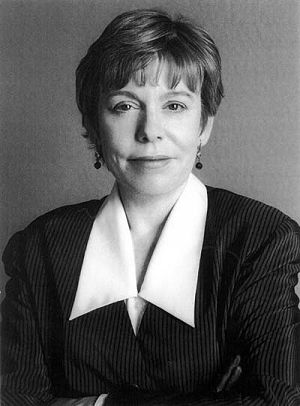
Karen Armstrong is one of the world’s leading commentators on religious affairs. She is a best-selling author, whose books have been translated into forty languages. Her early work focused on the monotheistic faiths of Judaism, Christianity and Islam, but she has since begun to explore the eastern religions. Her work is scholarly but written for the general reader, and has been appreciated not only by western audiences but also by Muslims, Buddhists and Hindus. She is a broadcaster, columnist, and is much sought after throughout the world as a public speaker. Her focus is not only on theology and spirituality but on the political implications of faith in the modern world.

Karen Armstrong spent seven years as a Roman Catholic nun in the 1960s, but then left her teaching order in 1969. She studied English Literature at the University of Oxford, earning the degrees of B.A. and M.Litt.. Since then she has taught modern literature at the University of London, and headed the English department in a girls’ public school. In 1982, she became a full time writer and broadcaster.

Her books include: A History of God [1993], which became an international bestseller; Jerusalem, One City, Three Faiths [1996]; The Battle for God, A History of Fundamentalism [2000]; Islam, A Short History [2000]; Buddha (2001); The Spiral Staircase: A Memoir (2004); A Short History of Myth (2005).The Great Transformation: The Beginning of Our Religious Traditions (2006); and finally Muhammad: A Prophet for our Time (2006).

The 3rd book was banned in Malaysia well known for its dearth of academic freedom.

Since September 11, 2001, however, she has become chiefly known for her work on Islam and Fundamentalism, particularly in the United States. She has addressed members of the United States Congress and the Senate on three occasions, has participated in the World Economic Forum, and spoken at an informal debate in the General Assembly of the United Nations. In 2005, she was appointed by Kofi Anan to take part in the United Nations initiative “The Alliance of Civilizations” which completed its report on the reasons for the rise of extremism and the best means of stemming this in November 2006

In autumn 2001, Karen Armstrong was Scholar in Residence at Lowell House, Harvard University, where she also delivered the Tillich Lecture (2001), the Peabody Lecture (2002) and the Ingersoll Lecture on Immortality (2005). In addition, she has lectured at Yale, MIT, Stanford, McGill and many other universities and colleges throughout Canada and the United States. She has recently received honorary degrees at Aston University in the West Midlands, where her books are required reading on the MBA course, and at Georgetown University, Washington DC. In the autumn of 2007, she will become the William Belden Noble Lecturer at Harvard.

It is a refreshing note that she has quite a lot of fan in Malaysia. So if you wanna find out more, go for that lecture. This is something you don't get to do often. Why wait?

Searching for the Chinese face of Christ

"...Chinese are pragmatics and our psychology for responding to God or spirits is on the basis of how a religion or deities help us in our daily lives. Core questions in Chinese thinking revolve around these immediate issues: will this deity help us overcome fears? Will following this religion improve our chances of going to a better world? Will our families be protected, and will these acts of devotion bring pleasure or displeasures to our ancestors and extended families? At the risk of oversimplifications, Chinese responses can be crudely reduced to whether this religion works, and does it work for me? These observations of the Chinese psyche have critical implications for Christian evangelistic approaches.

Western philosophies are deeply influenced by the Greco-Roman philosophical separation of being and doing. The result is Christian ethics being taught, while the application is up to the individual. Buddhists are interested in the outworking of doctrines and emphasize doing first, rather than conceptually understanding the doctrines. The credibility of the gospel suffers a serious blow when Christians preach ethics before...

...Our search for an Asian face of Jesus is ultimately an issue of the Lordship of Christ. The issue is not just what non-Christians think of Jesus (“who do people say I am?”) but who is Jesus to Asian Christians (“who do you say I am?”). This Christological question penetrates into the depth of Christian worship and discipleship where one’s loyalty to Christ is not confined to safe religious boundaries. The answer that Jesus is Lord cannot be verbalized merely by individuals in the privacy of their bedrooms but are to be discussed in public spaces.

Contextually, our answers to the question of who Jesus is cannot be completely disconnected from questions about Jesus commonly held by our Muslim and Buddhist neighbours. Likewise for Asians, Christian portraits of Jesus should emerge from the sufferings and heart struggles of Asia rather than a Christology developed in 16th Century Reformation Christianity. Radical discipleships must result in Christ penetrating every aspect of socio-economic and political world of Asia. The Apostle Paul has these multiple dimensions of Christ’s Lordship when he proclaimed that “Jesus Christ is the first born of all creation; for in Him all things were created, in heaven and on earth, visible and invisible, whether thrones or dominions or principalities or authorities - all things were created through Him and for Him” (Col. 1:15-16)." (emphasis mine)

adapted from "The Problem of an Alien Jesus in for Asian Christianity", by Tan Kang San, Redcliffe College

Apa Salahnya Kepelbagaian Kaum

“Dalam apa juga perniagaan yang kita lakukan, perlu ada usaha sama yang tulen antara kaum, itulah semangat Malaysia.

Apa salahnya pembabitan semua kaum dalam apa juga perniagaan, pembabitan semua pihak dapat memenuhi kehendak rakyat Malaysia,” katanya ketika dihubungi Berita Harian, semalam"

-- Dato Syed Amin Al Jeffri, Yang Dipertua Dewan Perniagaan Melayu Malaysia (DPMM)